
Advisory committee selects seven economic development tax incentives for interim review
Get AI-powered insights, summaries, and transcripts
Subscribe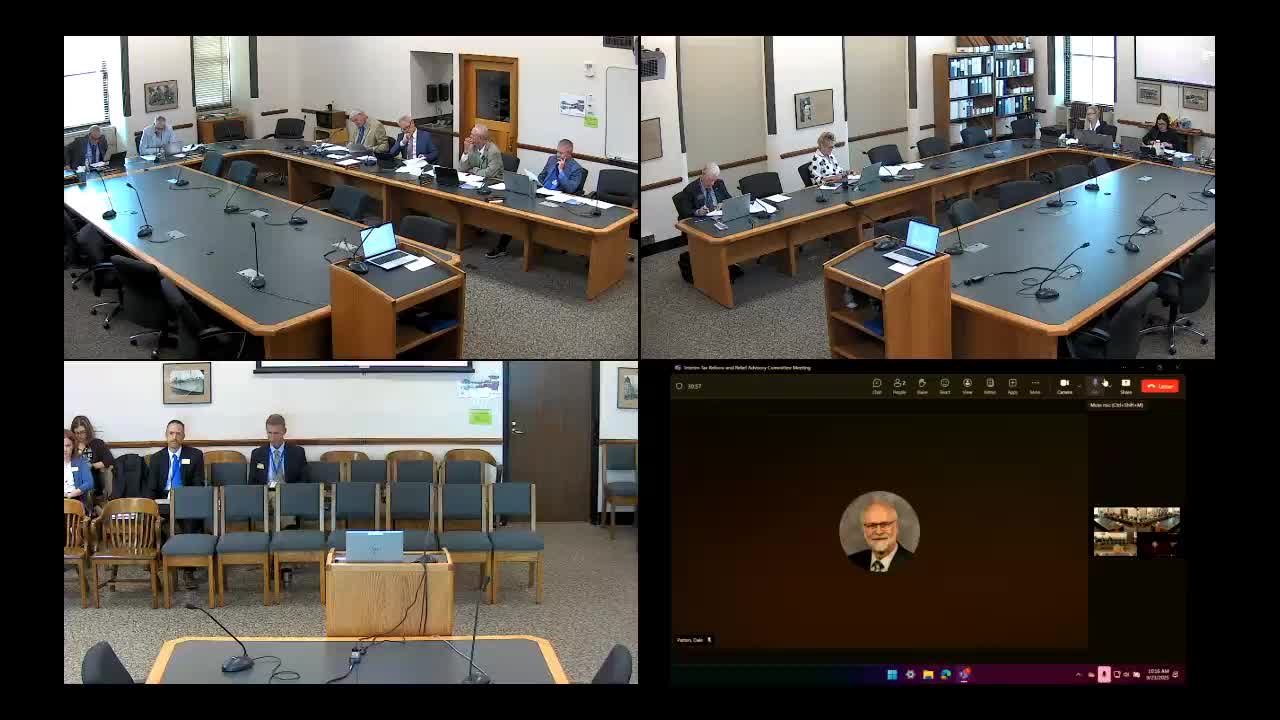
Summary
The committee voted to study seven named incentives during the 2025interim, including Renaissance zone credits and sales-tax exemptions for data centers, biologic manufacturing and coal-processing facilities.
The Tax Reform and Relief Advisory Committee voted to analyze seven economic development tax incentives during the 2025interim, completing a statutory six-year review cycle for incentives the committee is required to evaluate.
Representative Dressler moved that the committee select seven incentives for study; the motion was seconded and approved unanimously on a recorded roll call.
Legislative Council member Megan Gordon told the committee the incentive-review process is statutory: the incentive-evaluation statute requires periodic analysis of listed incentives and defines review criteria and reporting obligations. Gordon provided background memoranda on each incentive, including legislative history, the intent the Legislature perceived when the incentives were enacted, and suggested data and testimony the committee could request to support analysis.
Representative Dressler's motion identified these seven incentives for study this interim: Renaissance zone credits and exemptions; the angel investor/angel fund credit; tax increment financing (TIF) or development/renewal area incentives; the sales- and use-tax exemption for materials used to construct fertilizer or chemical processing facilities; the sales- and use-tax exemption for enterprise information-technology equipment and software for qualified data centers; the biologic-manufacturing sales- and use-tax exemption (raw materials, single-use product-contact systems and reagents); and the sales- and use-tax exemption for materials used to construct or expand a coal-processing facility that uses coal as a feedstock.
Gordon told members the incentive-evaluation statute (as cited in committee memos) directs interim committees to assess whether each incentive serves the purpose for which it was enacted and whether it is cost-effective and equitable. The statute requires committees to identify incentives to review before Oct. 1 of each odd-numbered year and to request data from state agencies, including the Department of Commerce and the tax commissioner's office, if the information is available.
The committee discussed the value of early versus staggered study scheduling. Several members urged staff to advertise specific incentives and meeting dates so stakeholders can provide tailored testimony. Senator Powers suggested focusing early interim meetings on incentives where current data are available, such as data-center activity and biologic-manufacturing exemptions, and reserving items that lack reporting for later sessions.
The committee recorded no amendments to the motion and directed staff to begin outreach to the Department of Commerce, the tax department and local taxing districts for data and witness lists. The motion carried with recorded "yes" votes from Chairman Beckettall, Senators Patton, Powers, Rummel and Weber and Representatives Dressler, Greenheck, Hedlund and Viggasaw.
Committee members also noted an existing request from Senator Hogan to the tax commissioner seeking broader disclosure of incentive claim information; Gordon said that letter had been received by the tax department and could be used to obtain nonconfidential information when appropriate.
Next steps include collecting the statutory data items listed in the background memos, soliciting written testimony from state agencies and local governments, and scheduling incentive-specific hearings during the interim.