
Mayor pro tem briefs council on powers and duties, cites Utah code and city ordinances
Get AI-powered insights, summaries, and transcripts
Subscribe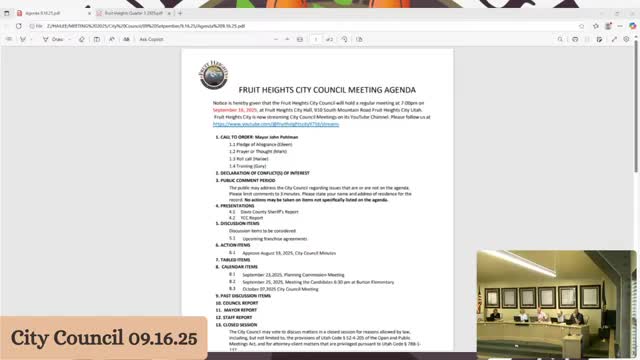
Summary
Mayor Pro Tem Gary Anderson gave a three‑minute training distinguishing council powers and duties, citing the Utah State Code, Fruit Heights ordinances and the Utah League of Cities and Towns handbook.
Gary Anderson, acting mayor pro tem, gave a brief training to the Fruit Heights City Council on the difference between powers and duties for elected officials and where to find governing authority in state code and municipal ordinances.
The training matters because it reminded council members where legal authority resides and clarified roles among the mayor, council and city manager, which affects decision‑making and oversight.
Anderson opened with a question: “What is a power and what is a duty?” and summarized the distinction: “In simplistic terms, the power is something that you can do, and the duty is something that you must do.” He told the council the primary references for resolving disputes over roles are the Utah State Code and the Fruit Heights City ordinances and that council members receive a “powers and duties handbook” produced by the Utah League of Cities and Towns.
Anderson described Fruit Heights’ form of government: “The Fruit Heights city is a 6 person council. This means the mayor is a nonvoting member of the council except for in the event of a tie. This means the council is the legislative body of the city.” He added that if the city manager is not performing duties, “it is the ultimate responsibility of the council to handle those issues often under the advisement from the mayor and city manager or city attorney.” Anderson cited specific ordinance and code references in the discussion.
The briefing was informational; no formal action was taken. Council proceeded to public comment and regular agenda items.