Get Full Government Meeting Transcripts, Videos, & Alerts Forever!
Get email alerts on the Housing Zoning Yimby topic
No spam. Unsubscribe anytime.
Mass. housing hearing spotlights 'Yes in My Backyard' bills, missing‑middle and parking reforms
Summary
Supporters and local officials told the Joint Committee on Housing that Senate Bill 962 and House Bill 1572 (the "Yes in My Backyard" package) would unlock smaller-scale "missing middle" housing, while advocates urged statewide parking‑requirement reform to lower costs and speed development.
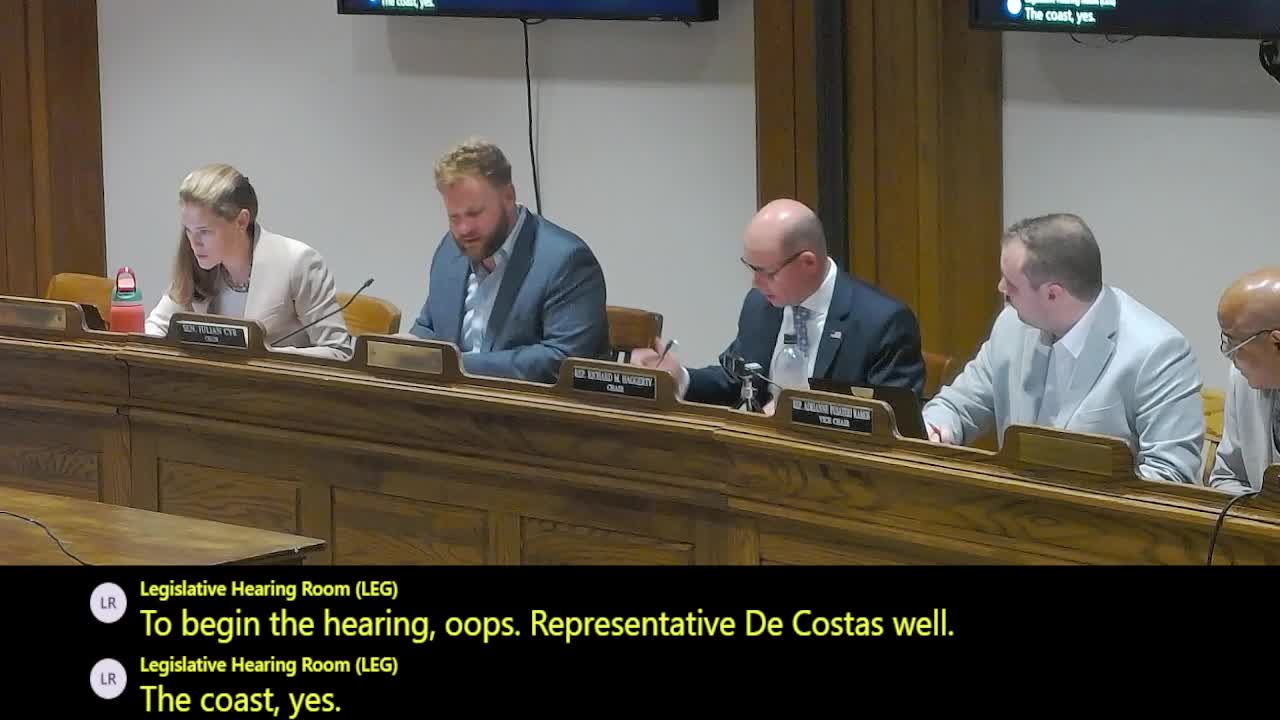
The Joint Committee on Housing heard testimony Thursday on Senate Bill 962 and House Bill 1572, an act to promote "Yes in My Backyard," with developers, municipal officials and housing advocates urging the Legislature to ease zoning and parking rules that they say block duplexes, triplexes and modest multifamily homes.
The bills would create a streamlined, by‑right pathway for missing‑middle housing and address minimum lot sizes, frontage and parking mandates, proponents said. "This bill removes unnecessary barriers and ensures that when new homes are built, they are homes our families can actually afford," said Keith Ferry, president and CEO of Way Finders, a Springfield‑based housing nonprofit.
Why it matters: Testimony emphasized that Western Massachusetts' housing stock and infrastructure — older neighborhoods, small parcels, and limited sewer and water access — make large apartment projects infeasible and leave a gap that duplexes, triplexes and modest multifamily homes could fill if local zoning allowed them. "Without subsidy, the numbers don't work," Ferry said, adding that state subsidy programs must be aligned with smaller projects.
Developers and advocates also urged reform of parking requirements, which they said add substantial cost to housing. "A single space can cost $10,000 to build in a surface lot, $40,000 in a garage," said a policy director with Parking Reform Network, noting that construction costs for parking translate directly into higher rents. Jonathan Burke, an attorney and planning‑board member in Salem, cited municipal data showing developers provided 1.18 spaces per unit on average but that peak use was about 0.85 spaces per unit, arguing that minimums are often oversupplied and expensive.
Supporting testimony came from Valley Community Development Executive Director Alexis Breitneker, Cambridge Vice Mayor Mark McGovern and Braintree Councilor Meredith Derica, among others, who said the bills would give municipal leaders additional, consistent tools to expand housing supply. "We need to meet the moment," McGovern said, describing local efforts in Cambridge to allow multifamily housing and reduce parking minimums.
Details and numbers: Witnesses cited a range of quantitative context: Ferry said Massachusetts Housing Partnership research finds large shares of developable parcels in Franklin, Berkshire and Hampshire counties lack sewer or water access, and he said Western Massachusetts faces about a $300,000 gap between the cost to build a unit and what local households can afford. Jesse Kenson Beninov of Abundant Housing Massachusetts said prior analyses show apartment buildings with four or more units can be built on roughly 4% of the state's land and three‑family homes on about 7%.
What was not decided: The hearing collected testimony but produced no committee votes. Supporters urged the committee to report the bills out favorably; opponents or municipal concerns were not a central theme during the panels heard in this session.
The committee also heard requests for complementary actions — aligning subsidy programs and offering predictable, statewide rules for parking and site plan review — which proponents said are necessary for the YIMBY reforms to produce housing at scale.