Get Full Government Meeting Transcripts, Videos, & Alerts Forever!
Get email alerts on the Public Safety Recruitment topic
No spam. Unsubscribe anytime.
Lawmakers and Boston officials back shortening Fire Cadet waiting period to one year
Summary
Representatives and a Boston city councilor urged the Joint Committee on Public Service to report favorably on House Bill 2995, which would allow Boston Fire Cadets to be eligible for appointment to the fire academy after one year of service instead of two, with proponents saying it would improve equity and local hiring.
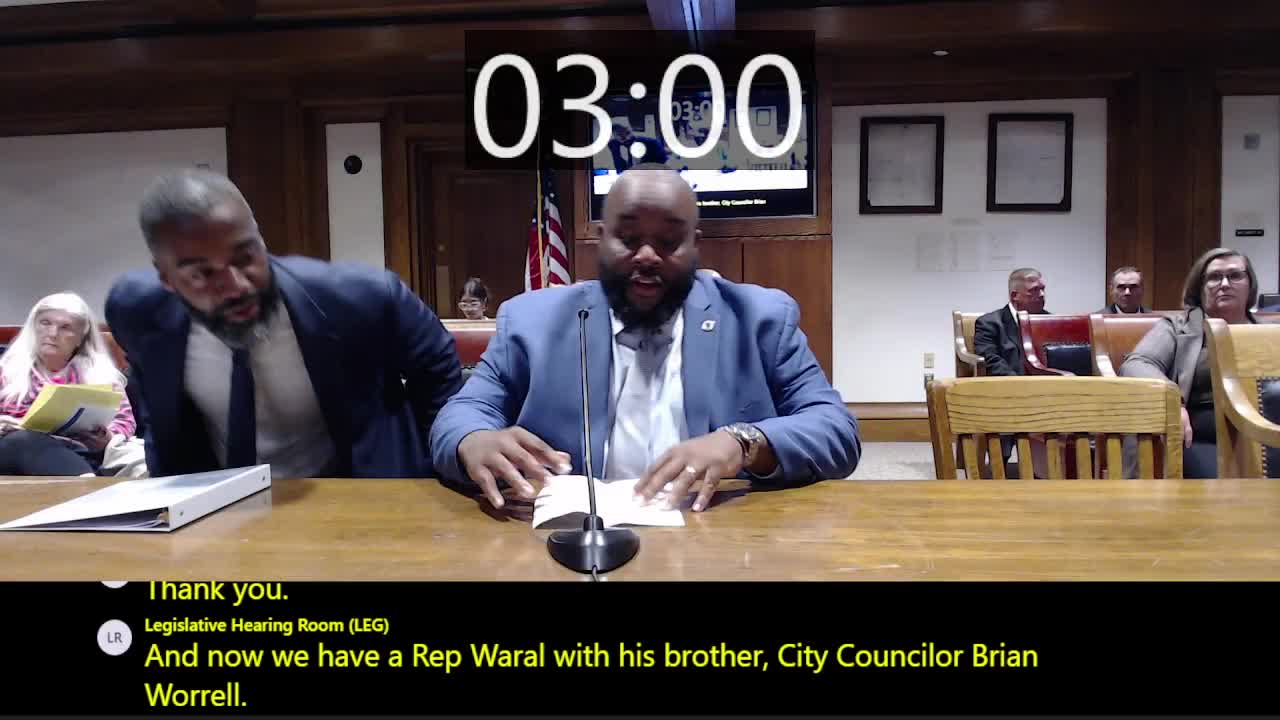
Representative Christopher Worrell of the Fifth Suffolk District told the Joint Committee on Public Service he supports House Bill 2995 to change the Boston Fire Cadet Program requirement from two years of cadet service before appointment to one. He said the change ‘‘is about justice, opportunity and equity’’ and argued the two‑year requirement disproportionately affects cadets from neighborhoods such as Dorchester, Roxbury, Mattapan and Hyde Park.
Worrell said the cadet program was designed to create a recruiting pipeline so ‘‘one‑third of every firefighter's class comes from Boston Cadet program’’ and that the two‑year wait can push cadets, often paid about $32,000 a year, out of the program. He told the committee the Fire Commissioner, Paul Burke, ‘‘has also voiced his support’’ and that some cadets are ready for the academy after one year.
Boston City Councilor Brian Worrell, who identified the petition as originating from the Boston City Council and said the council passed it 10–3, added that the hybrid civil‑service model recently adopted should help, but ‘‘it won't fix the actual cadet program’’ and that the change is ‘‘a minor change’’ that removes an ‘‘unnecessary barrier.’’
Committee members asked clarifying questions about demographic effects and the hybrid model; the witnesses said long‑term academy demographics remain a concern and the hybrid model is newly implemented. No committee action or vote was recorded at the hearing.