
Commissioners weigh buying six sheriff—s vehicles after lease, insurance and budget concerns
Get AI-powered insights, summaries, and transcripts
Subscribe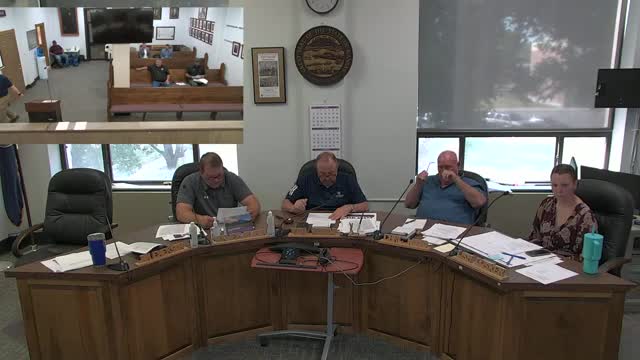
Summary
Crawford County commissioners and the sheriff discussed options to buy out or restructure an equity-lease arrangement with Enterprise Fleet Management for six sheriff—s Durangos after higher-than-expected debt-service, insurance gaps and altered vehicle counts left the sheriff—s office short of rotating vehicles.
Crawford County commissioners on Sept. 9 heard from Enterprise Fleet Management about options to exit or rework an equity-lease arrangement for six sheriff—s vehicles after the sheriff—s office said the current structure is creating unsustainable debt-service and insurance exposure.
Enterprise account executive Ken Olsen told the commission that the company used an equity-lease model tied to a Sourcewell contract and that the county can either pay the remaining balance to take vehicles outright, have Enterprise sell vehicles on the county—s behalf, or fund the remaining balance to zero. "You can certainly pay off the remaining balance," Olsen said. "At every given point, there's always a reduced book value ... so whatever that number is, we can get that all updated and show you exactly what that would look like."
The sheriff—s office reported a payoff quote from March of $237,323.05 for the vehicles and said ongoing combined loan and lease payments now run far higher than the analytics that justified the original plan. The sheriff said the office currently has six Durangos on lease, traded nine vehicles and received six, and had to purchase three additional vehicles, producing overlapping loan and lease obligations. He said the office has seen monthly payments spike into the low- to mid-five-figure range and described the mix of leased and purchased vehicles as creating an unsustainable debt load.
Sheriff Billy Tomasi described what he said were miscommunications from the prior administration about the deal and the resulting shortfall in the fleet: "When we traded those vehicles in, they had to be replaced. Therefore ... we went from a surplus of vehicles to a shortage," he told the commission. The sheriff said accident deductibles and reductions in book value have required out-of-pocket payments after collisions and that interest and loan-service timing have increased his office's costs.
Olsen said Enterprise—s lease interest is calculated as the three-year Treasury rate plus 350 basis points under the Sourcewell contract used for the arrangement and that their equity-lease model funds to a reduced book value rather than a zero balance. He also told commissioners that Enterprise does not itself issue the county—s insurance and that the county—s policy determined the gap that led to uncovered costs; Enterprise is listed as additional insured and as lienholder on certificates of insurance.
Commissioners and Enterprise discussed alternatives including purchasing the vehicles outright, funding to a zero balance, rolling vehicles back into Enterprise—s books for a nominal value to preserve residual equity, or returning vehicles for sale. Enterprise asked for the county fleet list and permission to run updated analytics and promised to return with updated payoff figures and side-by-side comparisons of buyout versus continued lease models. "If the partnership is over, we totally respect that," Olsen said. "If we can leverage the buyout model for you and still help, we can show you what that looks like. Our only request is communication across the board."
The commission did not take a formal vote on any contract change at the meeting; Enterprise and sheriff—s office staff agreed to meet again and for Enterprise to deliver an updated payoff statement and comparative financing scenarios for commissioners to review.