
Joint Revenue Committee reviews proposal to raise cigarette tax and close synthetic nicotine loophole
Get AI-powered insights, summaries, and transcripts
Subscribe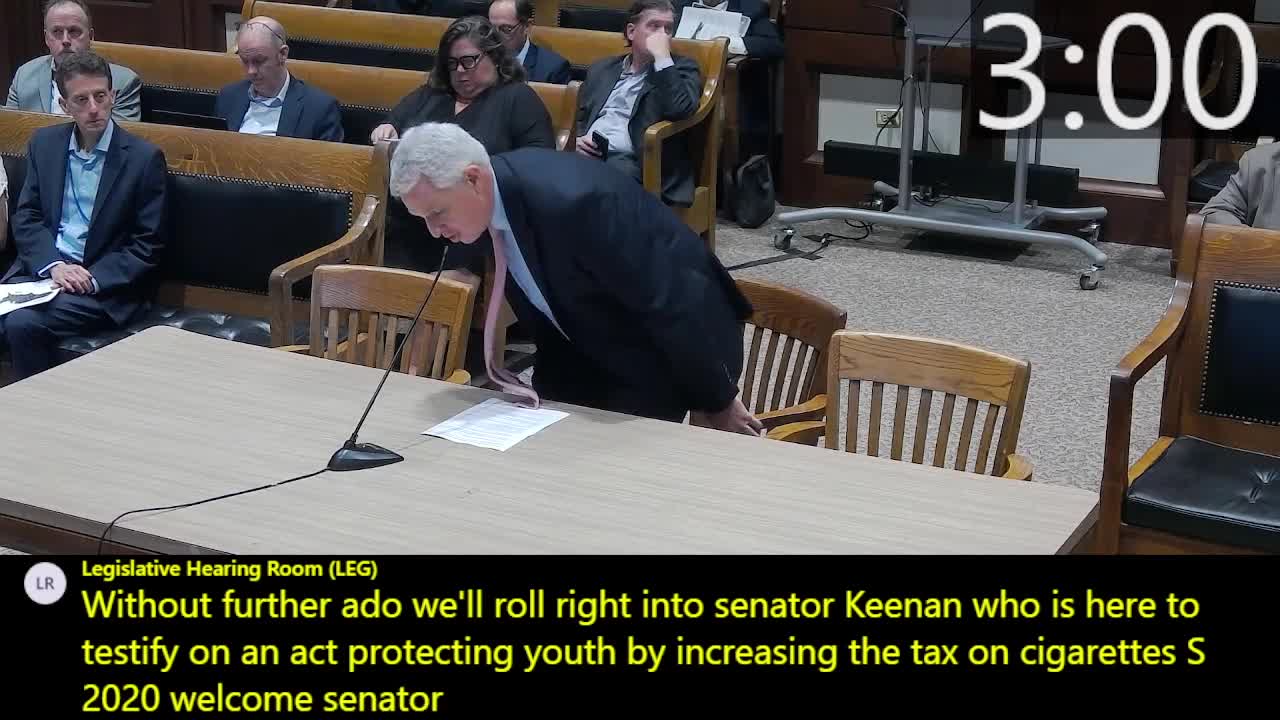
Summary
The Joint Committee on Revenue heard competing testimony on bills to raise the cigarette excise by $1 and to tax synthetic nicotine pouches, with public-health groups urging the increases and retailers and wholesalers warning of cross‑border sales and illicit markets.
Senator Keenan, sponsor of S.2020, told the Joint Committee on Revenue that S.2020 "is an act protecting youth from nicotine addiction by increasing the tax on cigarettes." The bill would raise the state cigarette excise by $1 per pack, to $4.51, and supporters said it would help discourage youth smoking and fund public-health work.
Public-health groups emphasized health and economic costs. "Raising tobacco taxes is one of the most effective tools we have to reduce smoking, especially among youth," said Chris Feeney of the American Heart Association. Mark Heimovitz of the American Cancer Society estimated smoking's annual costs and urged the committee to update excise definitions to include synthetic nicotine products. "The tobacco industry is constantly looking for new products to hook young people," he said, urging closure of the synthetic‑nicotine loophole.
Retail and industry witnesses warned higher excise rates would push purchases out of state or into illicit channels. Peter Brennan of the New England Convenience Store and Energy Marketers Association and Kyle Feldman of National Convenience Distributors said high taxes already drive cross‑border purchases, reducing legitimate in‑state sales and the combined basket taxes on fuel, snacks and other items. "When our customers go elsewhere to purchase tobacco or nicotine products, they don't just lose the sale — they lose the entire basket of goods," Brennan said.
Industry speakers also urged a differentiated approach for newer noncombustible products such as nicotine pouches. Several wholesalers and convenience‑store representatives argued that heavy taxes on pouches could discourage adult smokers from switching to lower‑risk alternatives and recreate an illicit market similar to past shifts in smokeless tobacco sales.
Tobacco control advocates countered that excise increases most affect youth use. Lisa Phillips of Tobacco Free Mass urged a $1 increase per pack and an increase in the cigar wholesale rate from 40% to 80%, and supported bills closing the synthetic nicotine definition to subject pouches to excise tax.
Committee members asked for implementation details and data. Witnesses pointed to prior state research and out‑of‑state experiences: a speaker from the Mackinac Center cited studies estimating high illicit‑market shares in states with high taxes, while retail groups cited Maryland's recent revenue declines after a large excise increase.
The hearing included requests for more data on cross‑border flows, tax stamps and the composition of the nicotine market before the committee acts. No formal votes or committee actions were taken at this hearing.
The committee will consider testimony and written comments filed with staff; witnesses were reminded they could submit further information by email to committee staff.