
Parents and survivors tell task force of delays, dismissals and re‑traumatization in abuse cases
Get AI-powered insights, summaries, and transcripts
Subscribe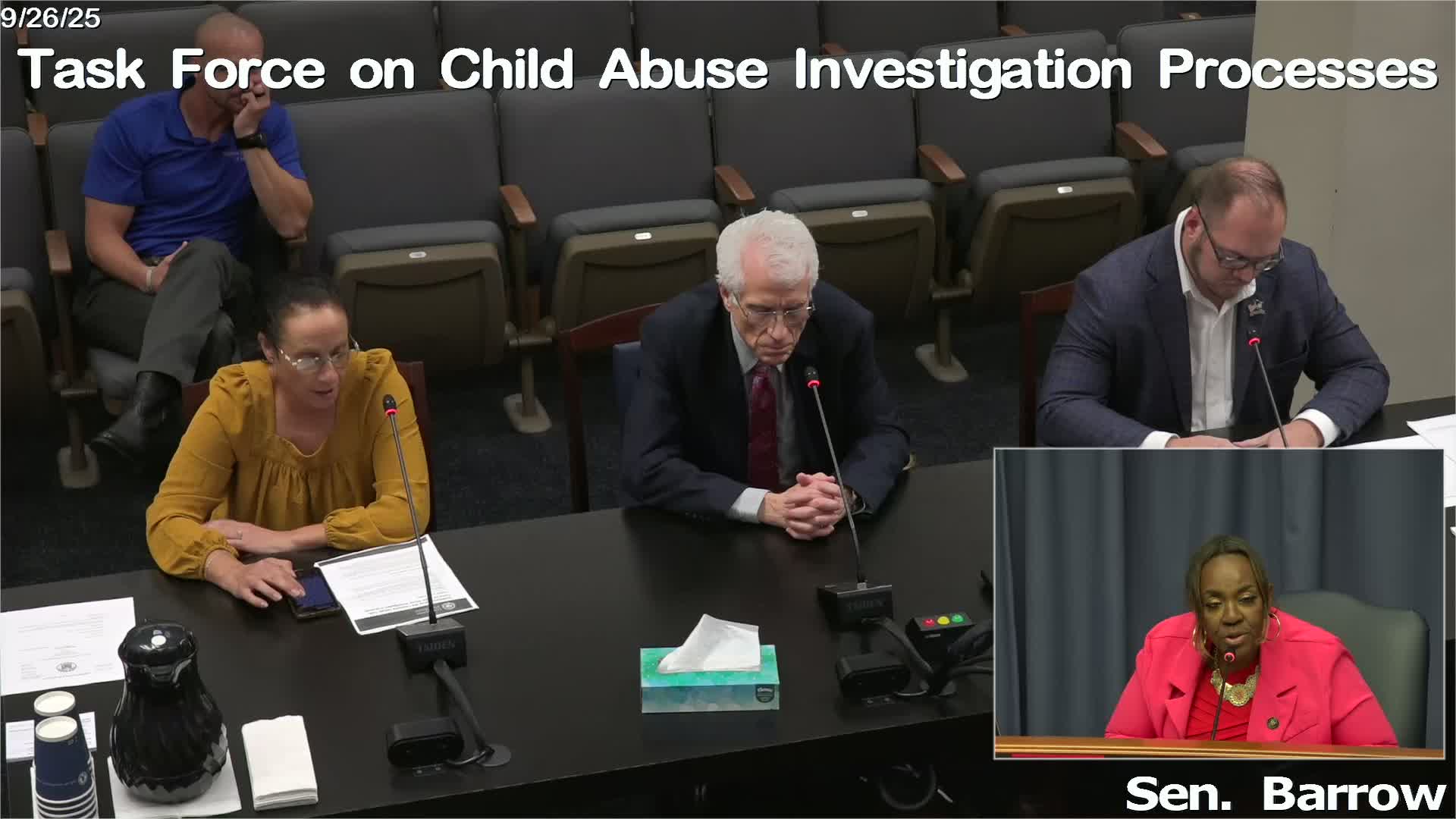
Summary
Multiple public commenters and survivors told the task force of long investigations, missed interviews, and what they characterized as dismissive or obstructive responses from law enforcement and child‑welfare agencies; several plaintiffs described protracted court fights and emotional harm.
Three parents and survivors offered extended public testimony on Sept. 26 describing case‑level failures they say prolonged harm and delayed accountability.
A witness who identified herself as Albritton — a registered nurse and mother — described an eight‑year ordeal after her child reported sexual abuse. "He was arrested... He bonded out the same exact day he got arrested," Albritton said, and later recounted repeated delays and investigators she said treated her family dismissively. She said investigators advised the family to allow the alleged offender continued access to the child while the investigation continued and described the ongoing trauma her child experienced. Albritton said therapy has continued for years.
Michael (Grant) Rogers and his wife, Susan Rogers, described a case that involved two parishes and alleged familial ties between a SANE examiner and a sheriff's office. "There was a t r o that was granted... The t r o was not heard... The children remain in danger," Rogers told the task force, saying photographs, medical records and recorded statements were available but that protective action was not taken. Susan Rogers described what she characterized as dismissive and accusatory comments from law‑enforcement personnel and said the family was later charged in part with filing a false report; she said the charges were an additional trauma.
Those public accounts echoed concerns raised by providers in the panel testimony: inconsistent local practices, missed CAC referrals, and interviews conducted in settings that may impair a child’s ability to disclose. Several task force members urged law enforcement, DCFS and CACs to follow up in specific cases and to use the task force’s convening power to identify jurisdictional failures. The chair asked affected families to connect with staff and local captains after the hearing to ensure investigative partners were informed and that immediate safety steps could be taken.
The testimony was personal and, by design, case‑specific; the task force did not enter evidence into the record or make legal findings. Task force staff and law‑enforcement representatives present agreed to follow up privately to determine whether procedural remedies or referrals to other offices were necessary.