
DCFS officials say Act 409 expanded alternative-response work; agency added overnight staff but data-sharing gaps remain
Get AI-powered insights, summaries, and transcripts
Subscribe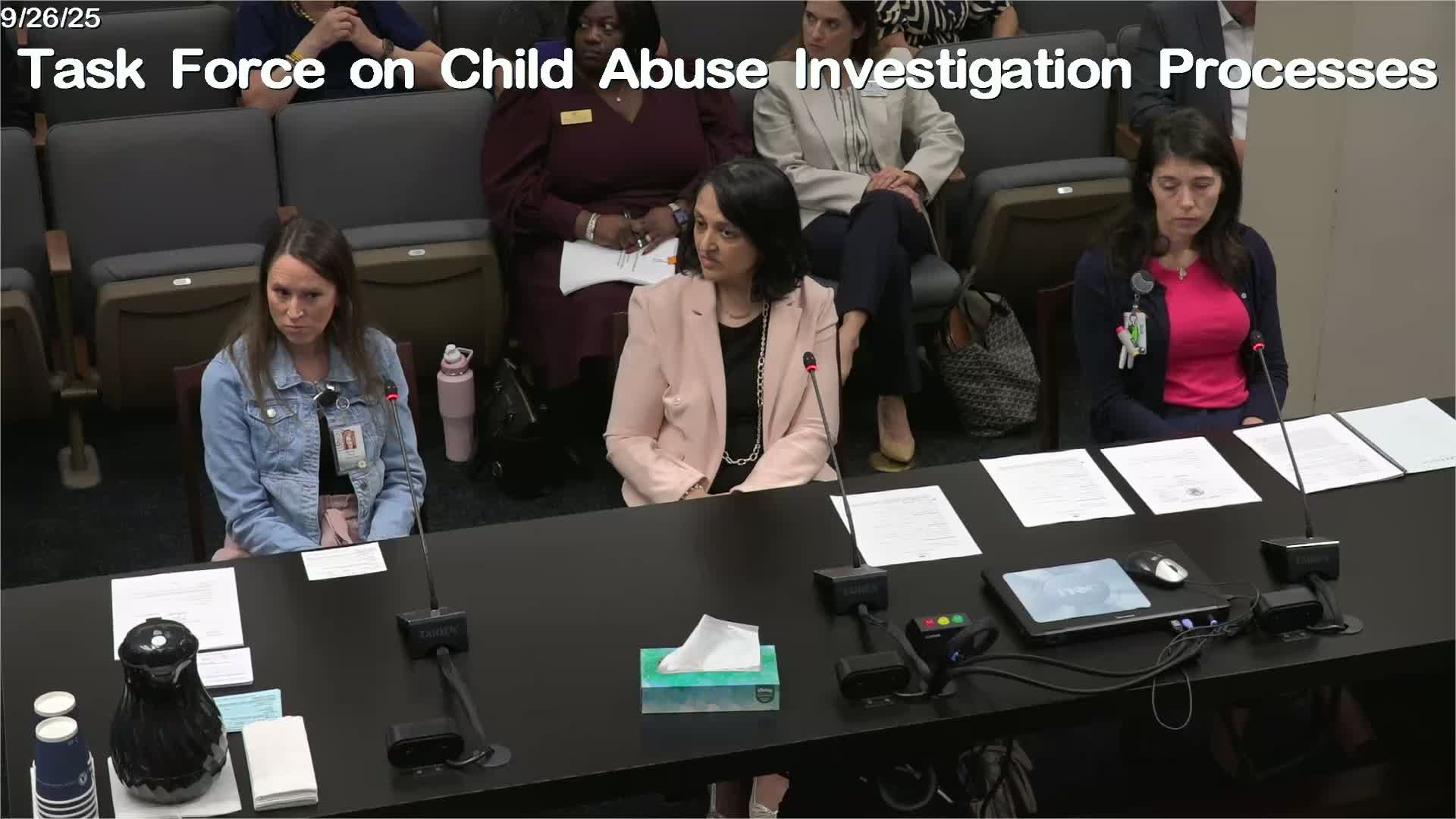
Summary
DCFS and task-force witnesses described the rollout of Act 409, DCFS hiring to expand shift coverage, and 43 alternative-response cases since implementation; witnesses and CAC leaders said referral and notification gaps and limits on reporter disclosure can cause children to fall through cracks
Officials from the Department of Child and Family Services told the task force on Sept. 26 that Act 409 broadened DCFS's ability to investigate certain child-on-child and caretaker allegations and that the agency has hired additional staff to expand shift coverage, but witnesses said information-sharing gaps and confidentiality rules continue to complicate joint investigations.
Dr. Hook, a medical-team representative from DCFS, said the agency has established a three-person medical team and has increased staffing to provide a second shift dedicated to investigations and alternative-response work. "We have hired 51 additional staff members to start a second shift for DCFS," Dr. Hook said in testimony, adding that the new hires will cover evenings, weekends and holidays and that the second shift is intended to reduce response times during peak presentation hours.
DCFS reported 43 alternative-response cases under the Act 409 pilot period described at the hearing: 41 occurred in-home and two occurred in school settings, Dr. Hook said. She told the panel that the agency has accepted and investigated those alternative-response referrals and that staff are being trained to conduct both alternative response and formal investigations.
CAC leaders and medical providers at the meeting welcomed the increased DCFS staffing but said important operational gaps remain. Task-force members and Erica DuPape, executive director of the Jefferson CAC, said some parishes'CAC MDTs are effectively multidisciplinary while others are weighted toward law enforcement, and DuPape warned that investigators do not always pursue the same lines of inquiry even when medical findings exist.
The hearing also clarified legal limits on DCFS disclosure: several judges reminded the room that reporter identity is protected by statute and agency policy and that DCFS staff may face sanction for revealing who filed a report. That confidentiality can complicate clinicians' expectations that investigators will contact them for collateral records, a problem speakers said can be mitigated by clearer language in DCFS notification letters and by routine dual reporting to law enforcement.
Task-force members asked DCFS for operational data and said they would examine whether statutory or administrative changes could improve cross-agency exchange, notification practices and MDC membership standards. DCFS staff said they have updated internal guidance and are working with hospitals, CACs and law enforcement to reduce delays in triage and investigation.