
Hospitals describe tight forensic windows and low yield for pediatric evidence kits
Get AI-powered insights, summaries, and transcripts
Subscribe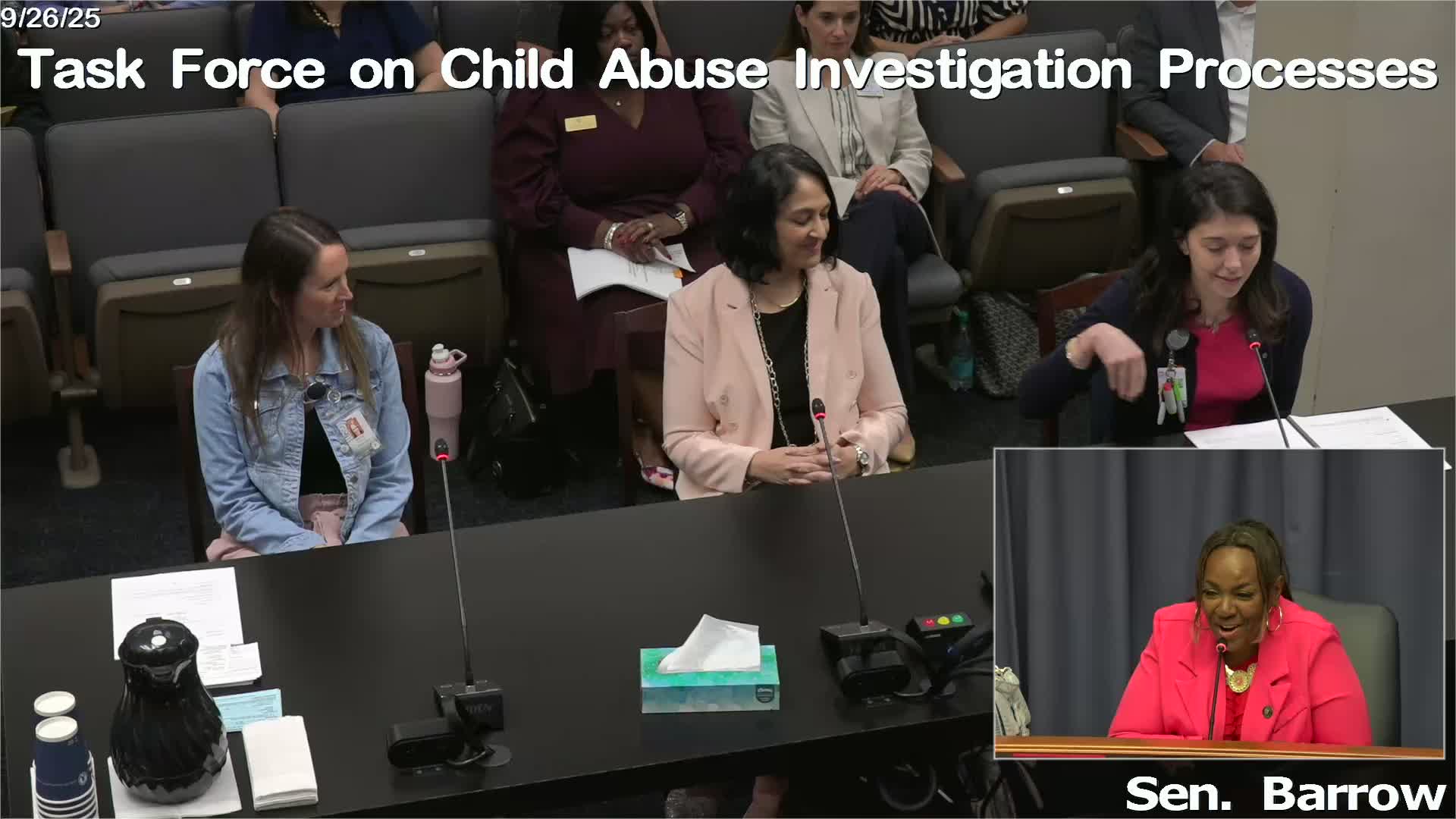
Summary
Physicians and forensic nurses told the Child Abuse Investigation Task Force on Sept. 26 that hospitals and SANE teams operate under tight time frames for collecting forensic evidence and that many abused children do not present within the short window that yields DNA.
Physicians and forensic nurses told the Child Abuse Investigation Task Force on Sept. 26 that hospitals and SANE teams operate under tight time frames for collecting forensic evidence and that many abused children do not present within the short window that yields DNA.
Dr. Kristen Pontiff, a physician who testified about emergency-department procedures, said hospitals document suspected abuse at triage, coordinate physician, nursing and social-work assessments, notify law enforcement and the Department of Child and Family Services (DCFS) as required, and send referrals to local child advocacy centers. She described a team approach intended to limit repeat exams and additional trauma for children.
"We have a communal conversation" with families about whether to group the physical exam, lab work and evidence collection so the child endures fewer separate procedures, Pontiff said in testimony to the panel.
Dr. Neha Mehta, a board-certified child abuse pediatrician, described a subspecialty medical program that evaluates referred children in detail and supports about seven child advocacy centers in her region. Mehta said Manning Family Children's's outpatient child-abuse program evaluates roughly 1,200 to 1,500 children a year; she told the panel that fewer than 5 percent of those cases arrive within the timeframe where a forensic evidence kit for a prepubescent child is likely to yield usable DNA.
SANE nurse Rachel Morgan described a practical limit on deployment and collection. Morgan said SANE teams are called to hospitals for sexual-assault cases reported within the past 120 hours; in prepubescent children, forensic collection that can identify touch DNA from external genital surfaces is most likely within about 72 hours, she testified. Morgan said examiners photograph findings in three angles, measure injuries, and collect swabs according to the child's history; caregivers and children give consent when age-permission rules allow.
Panelists emphasized that a normal physical exam does not rule out abuse. "The vast majority of children who report sexual abuse ... still have normal exams," Mehta said, adding that judges, juries and families often misinterpret a normal physical exam as evidence that abuse did not occur.
The medical witnesses identified operational constraints that affect investigations: the short evidence-collection window, limited SANE coverage in rural areas, and follow-up communication gaps between medical providers, CACs and investigators. Mehta said her center serves roughly 18 parishes through its outpatient and satellite clinics and that hospital-originated reports supplement investigative work by law enforcement and DCFS.
Task-force members asked for data on kit-collection rates, presentations by time of day and local response times; several clinicians said they could provide counts of annual referrals, forensic kits and outpatient visits to help the task force evaluate service coverage and turnaround times.
The witnesses did not propose an immediate change to clinical protocols at the Sept. 26 meeting; they recommended clearer reporting guidance for mandatory reporters, expanded SANE coverage, and cross-agency agreements so medical records and findings are exchanged promptly with investigators.