
Task force hears that a disabled student's disclosure did not trigger timely criminal follow-up
Get AI-powered insights, summaries, and transcripts
Subscribe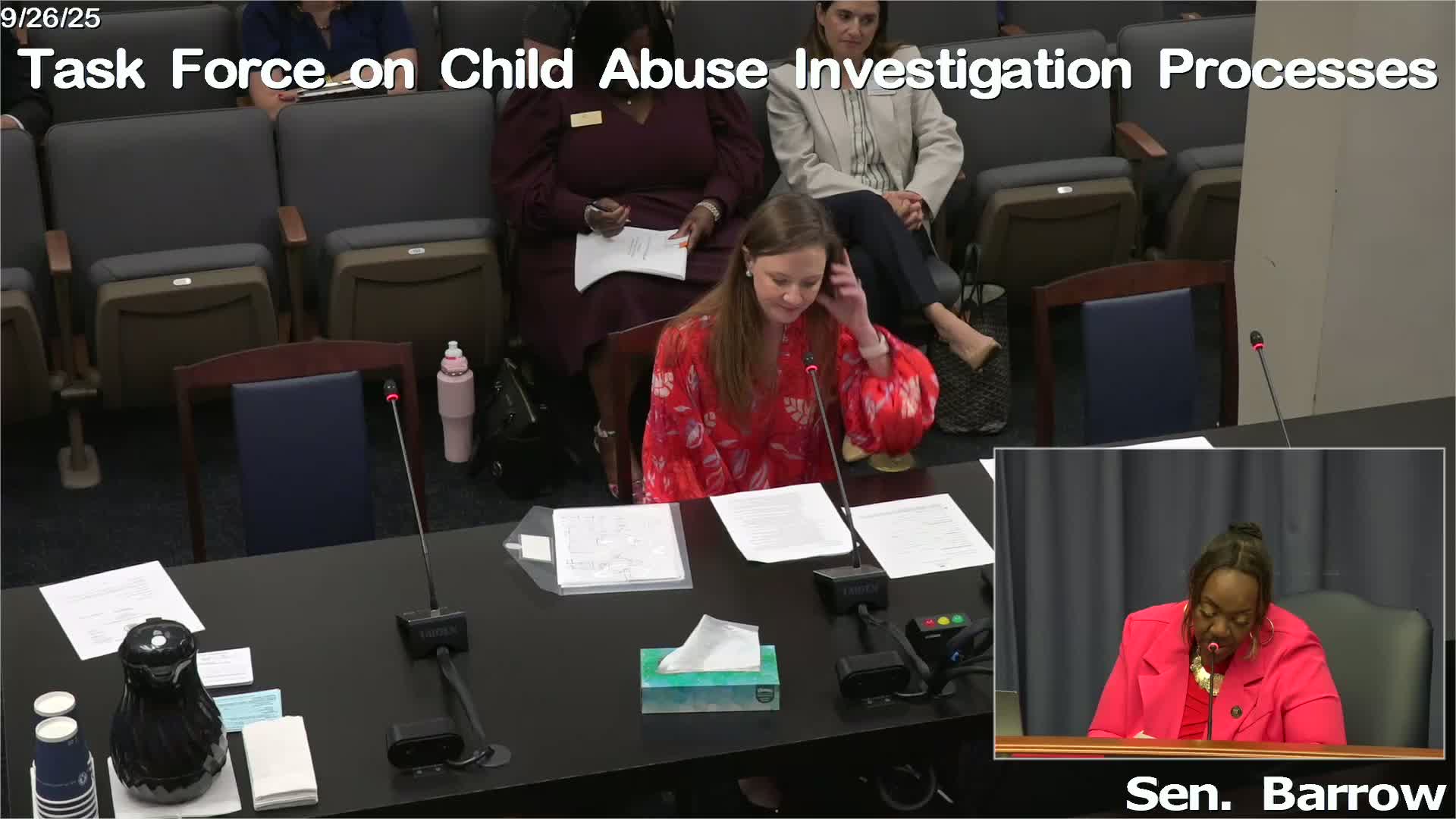
Summary
A psychiatrist told the Louisiana Child Abuse Investigation Task Force on Sept. 26 that a Jefferson Parish student with developmental disabilities disclosed sexual abuse in March 2024 but the family was never notified after investigators declined to arrest a school paraprofessional, leaving the child fearful and out of school.
A psychiatrist told the Louisiana Child Abuse Investigation Task Force on Sept. 26 that a Jefferson Parish student with developmental disabilities disclosed sexual abuse in March 2024 but the family was never notified after investigators declined to arrest a school paraprofessional, leaving the child fearful and out of school.
The testimony by Dr. Kavanaugh, a psychiatrist who treated the boy identified in testimony as "Timmy," underscored how communication gaps among schools, child protective services, law enforcement and child advocacy centers (CACs) can leave victims without notice of investigative outcomes and without clear safety plans. Task-force members said the case illustrated why the group must study procedural changes.
Dr. Kavanaugh, who described his ongoing treatment of the youth, told the panel that Timmy first disclosed in March 2024 and later identified a paraprofessional by name. The child's pediatrician and a CAC medical exam both documented anal tearing in the process of healing, Dr. Kavanaugh said. He told the task force the family received a DCFS letter stating the agency would forward information "to law enforcement for their consideration" but that no one told the family whether law enforcement had arrested or otherwise acted.
Erica DuPape, executive director of the Jefferson Children's Advocacy Center, told the panel CACs convene multidisciplinary teams (MDTs) for case review but that MDT members do not always reach the same outcome. "At the end of the day, we can only bring the entities together and do everything we can to ensure that the children receive the services that they need," DuPape said. She and Dr. Kavanaugh both said teams sometimes lack consistent clinical or ADA-informed input for children with intellectual or developmental disabilities.
Dr. Kavanaugh described particular challenges when interviewing children with cognitive or communication differences: he said some children are highly verbal in social settings but cannot reliably repeat a factual narrative in the same words, and that nonverbal storytelling (puppets, drawings, demonstrations) can be essential evidence for that population. "My suggestion is that the default should be to believe the child," he told the task force, urging more training for investigators on disability-adapted interviews and repeated interviews when needed.
Panel members also discussed the limits on what DCFS can disclose about who made a report. Judge Womble reminded the room that state law and agency rules protect reporter anonymity and that DCFS staff may face criminal penalties for revealing reporter identity; she said that constraint can frustrate clinicians who expect investigators to know which providers filed reports.
Task-force members said next steps should include: clarifying protocols for CAC MDT composition and decision-making; improving notification to families about investigative outcomes; expanding investigator training on interviewing children with disabilities; and exploring how forensic psychiatry and medical collateral records can be integrated earlier in investigations. No formal policy change was adopted at the Sept. 26 session; panelists said they would return to these topics for potential legislative or administrative recommendations.
The task force scheduled follow-up work to review MDT practices, notification letters and training needs and to assess whether statutory or administrative changes are needed to improve continuity between medical providers, CACs, DCFS and law enforcement.