
Swampscott Public Schools roll out K–12 improvement plans emphasizing behavior, targeted instruction and family engagement
Get AI-powered insights, summaries, and transcripts
Subscribe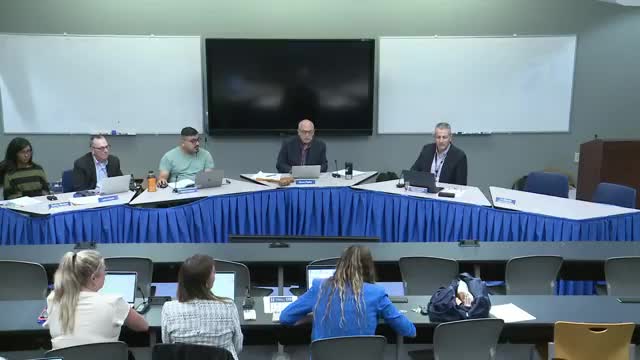
Summary
At a Sept. 25 Swampscott School Committee meeting at Swampscott High School, district principals presented aligned school improvement plans prioritizing a K–12 behavior framework (PBIS), a new targeted-instruction block for differentiated reading and math, and expanded community and family engagement initiatives.
SWAMPSCOTT, Mass. — At a Sept. 25 Swampscott School Committee meeting at Swampscott High School, district principals described aligned school improvement plans that prioritize student behavior supports, a new targeted-instruction block for reading and math and increased family and community engagement across the elementary, middle and high schools.
The plans are intended to reduce behavior incidents, raise academic performance in reading and math and boost students’ sense of belonging, principals said. Laurie Samborn, principal of Swampscott Elementary School, said the elementary’s plan centers on a Positive Behavioral Interventions and Supports (PBIS) rollout with a schoolwide recognition system and cross-grade “houses.” “This year, we're really excited excited about the 3 areas of focus that we're gonna put in towards the elementary school,” Samborn said. She described a house-based reward system (pelicans, pipers, flamingos, puffins and gulls) and a Lobstar token bucket visible in the hallway for tracking team progress.
Why it matters: district leaders tied the behavior work to measurable goals — a 15% reduction in major behavior referrals and a target of 90% teacher implementation fidelity — and said the elementary PBIS will be piloted and assessed for adjustments. Samborn said the elementary’s team expects to document results through office referral data and fidelity checklists.
Instruction and assessment: Ivy Horgan, assistant principal at Swampscott Elementary, described the district’s “targeted instruction” (TI) block, a scheduled period during the day when students are placed in fluid, data-driven groups for differentiated reading and math. “Our targeted instruction, our goal is to improve our student performance in reading and math,” Horgan said. Teachers and specialists are preparing proposed groups; progress reviews are planned every six to eight weeks. Sarah Kent and Justin Gelb were named as lead staff supporting proposal development and data work. The elementary team said it aims to launch an initial cohort in the October–December window.
Middle school goals and timeline: Jessica Minter, principal of Swampscott Middle School, said the middle school’s plan focuses on data literacy, academic achievement (with a specific emphasis on writing), belonging and family partnership. “By June 2026, Swampscott Middle School will increase staff and student data literacy to improve academic achievement,” Minter said. The middle school is targeting the lowest-performing 25% of students for accelerated growth while also preserving enrichment opportunities for higher-performing students. Minter and the committee discussed MCAS writing work and said DESE accountability measures are part of the evidence set the schools will use.
High school supports and scheduling changes: At the high school level, district staff described expanded advisory/X-block time, a scheduling emphasis on writing across the curriculum, and new tools intended to manage in-day supports. Director of technology Latanya Mac described SmartPass, a “digital hall pass monitoring application platform” meant to provide objective data on out-of-class time and to improve student safety and attendance tracking. Mac also described MyFlex Learning, a sign-up system integrated with the Aspen student information system to let students reserve additional instructional or intervention time during X-block.
Community building and family engagement: Across grades, principals stressed community connections — mystery readers, partnerships with the senior center, police and fire department visits, and a return of the Swampscott Community Foundation (SCF) fundraising and family events. Samborn said the elementary will bring eighth graders to read to second graders starting Oct. 7 and is expanding community volunteer opportunities. School leaders said the district will use Instagram, an existing newsletter (“Monday scoop”), and other channels to publicize activities and strengthen community support.
Student perspective and implementation steps: Student representative Sasha Sidori told the committee the school year is “going very smoothly so far,” and praised the recent clubs and activities fair. District leaders said they will treat PBIS as a pilot and reflect on teacher feedback, and that targeted-instruction groupings will be fluid and revisited every 6–8 weeks. The middle school and high school principals said they plan to report back with midyear updates to the committee.
What the committee decided: The committee did not vote on the improvement plans at the meeting; members asked for midyear progress reports and for the principals to return with implementation updates. The district did accept a separate donation for the high school band (see separate action item).