Get Full Government Meeting Transcripts, Videos, & Alerts Forever!
Get email alerts on the Education Career Training topic
No spam. Unsubscribe anytime.
Trustee presents plan to expand cybersecurity courses, dual‑credit partnerships
Summary
A board member outlined a proposal for expanded cybersecurity coursework, certification pathways and university partnerships, citing workforce demand and talks with UTSA; no formal action or vote was taken.
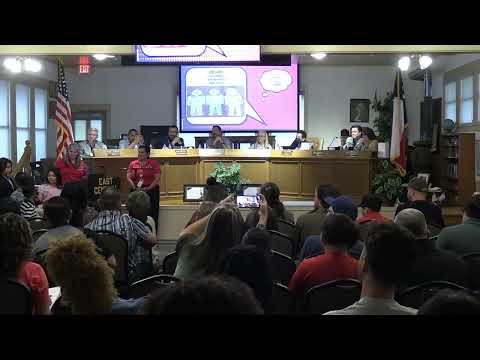
A board member of the EAST CENTRAL ISD presented a proposal to expand cybersecurity education across the district, including dual‑credit courses, industry certifications and partnerships with universities such as the University of Texas at San Antonio (UTSA).
The presentation argued the district could create career pathways beginning in middle school and continuing through high school, using coursework such as Foundations of Cybersecurity, AP Computer Science, a Cyber Capstone and industry certifications to prepare students for entry‑level jobs and dual credit opportunities.
Why it matters: The presenter framed cybersecurity as a growing local and national labor market that could offer students high starting salaries and multiple upward career pathways. The presenter said the district has held preliminary talks with UTSA and other partners to explore curriculum and certifications that could be offered as dual credit or through local partnerships.
Details of the proposal and supporting claims include: the presenter cited a range of workforce and market figures (for example, describing global cybercrime costs as "around 9 to $10,000,000,000,000 annually" and referring to a technology market estimate during the presentation). He listed entry‑level starting salaries for cybersecurity roles and an array of certifications (Security+, other industry credentials and pathways to higher‑level clearances). The presenter also summarized district course counts he had compiled: "Foundations of Cybersecurity" offered in some grades, AP Computer Science courses in grades 10–12, and only a small number of senior capstone projects reported.
The presenter said UTSA representatives had expressed interest in early engagement and that more information from UTSA could appear at a future meeting. He recommended exploring dual‑credit options, additional K–12 coursework, and early exposure activities in elementary grades.
No formal motion, vote or directive was recorded in the transcript; the remarks were presented as ideas for the board to consider. The presenter said he planned to return with notes and potential next steps for June and to continue conversations with UTSA and other partners.
Quotes from the meeting include a student‑level remark used during the presentation and board discussion referencing a trustee knowledgeable about cybersecurity: "We actually have a board member here, Mister Gearhart, who knows a thing or two about cybersecurity," the presenter said when noting local expertise. The presenter also said, "Expect more UTSA; it might even be the very next meeting," when describing university engagement.
Next steps noted by the presenter included continuing outreach to higher education and industry, investigating dual‑credit options, and returning with more detailed recommendations. The transcript does not show the board taking formal action during this meeting on the cybersecurity items.