Get Full Government Meeting Transcripts, Videos, & Alerts Forever!
Get email alerts on the Procurement Reform topic
No spam. Unsubscribe anytime.
Atlanta procurement chief outlines 23-step reform, cites long RFP cycle times and supplier outreach plans
Summary
Atlanta's Chief Procurement Officer told the Finance and Executive Committee the department has adopted a streamlined 23-step procurement process, reported large backlogs in RFP cycle time (averaging 318 days), and announced expanded supplier engagement tools to reduce questions and speed awards.
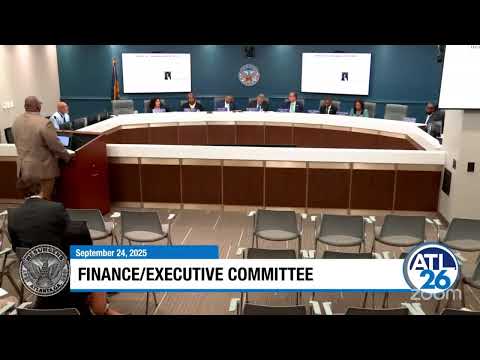
The City of Atlanta’s Chief Procurement Officer told the Finance and Executive Committee on Sept. 24 that the city's procurement department has launched a streamlined 23-step sourcing process and new supplier engagement tools aimed at shortening long solicitation cycle times.
The new process matters because many complex purchases have been held up by long review and question periods, department officials said. The CPO said the city has processed 43 solicitations since June, including 24 invitations for bids and seven requests for proposals, and has cut average IFB cycle time to 59 days while RFPs remain long at an average of 318 days.
“The purchase order spend so far is $824,000,” the Chief Procurement Officer said, and described work to reduce cycle times: “We've been doing a lot of work in terms of training our teams...planning and preparation. We need to spend a whole lot more time upfront planning the procurement projects, including stakeholder engagements with our suppliers, market research, crafting clear and concise requirements.”
Why this matters: long procurement lead times can delay city services and encourage ad hoc procurement methods such as sole-source or emergency declarations. At the meeting, council members repeatedly pressed for targets and controls to avoid perverse incentives to shift work into exceptions.
Councilmember Juan questioned the scale of the backlog and urged targets. “I just wanted to at least note that I'm nervous about 318 days for an RFP,” Commissioner Juan said. The CPO acknowledged many RFPs in the queue began before the new process and said the team is finishing legacy solicitations while applying the new approach to future work.
Among the specific steps the CPO described: reviving pre-advertising notices to solicit early supplier input; holding pre-solicitation conferences as informal RFIs to iron out scope; shortening and standardizing solicitation templates; integrating responses into the city’s Oracle/Deloitte system so suppliers can respond directly online; and refreshing atlsuppliers.com to be more interactive.
The CPO said special procurements showed faster turnarounds (about nine days), emergencies averaged about 32 days, sole-source negotiations can take much longer (one recent sole source took about 150 days) and piggyback/cooperative procurements were averaging about 48 days. The office also reported processing more than 5,300 purchase orders in the reporting window.
Council members raised operational questions: how cancellations are tracked, whether preplanning will include cross-department inventory to create omnibus solicitations, and how the contract-signing cycle can be shortened. The CPO said the signature cycle currently takes about 14–15 days to obtain all city signatures and that the department uses a matrix team to help agencies advance signings.
The committee did not take formal action on the presentation. Members complimented the CPO’s staff training efforts and urged setting concrete targets to eliminate incentives to use alternative procurement methods when solicitations stall.
The CPO said the department will continue training and refining standard operating procedures and will return with updates as the new process is applied to incoming procurements.