Louisiana task force makes poverty central to rural delivery-care plan, readies federal grant bid
Loading...
Summary
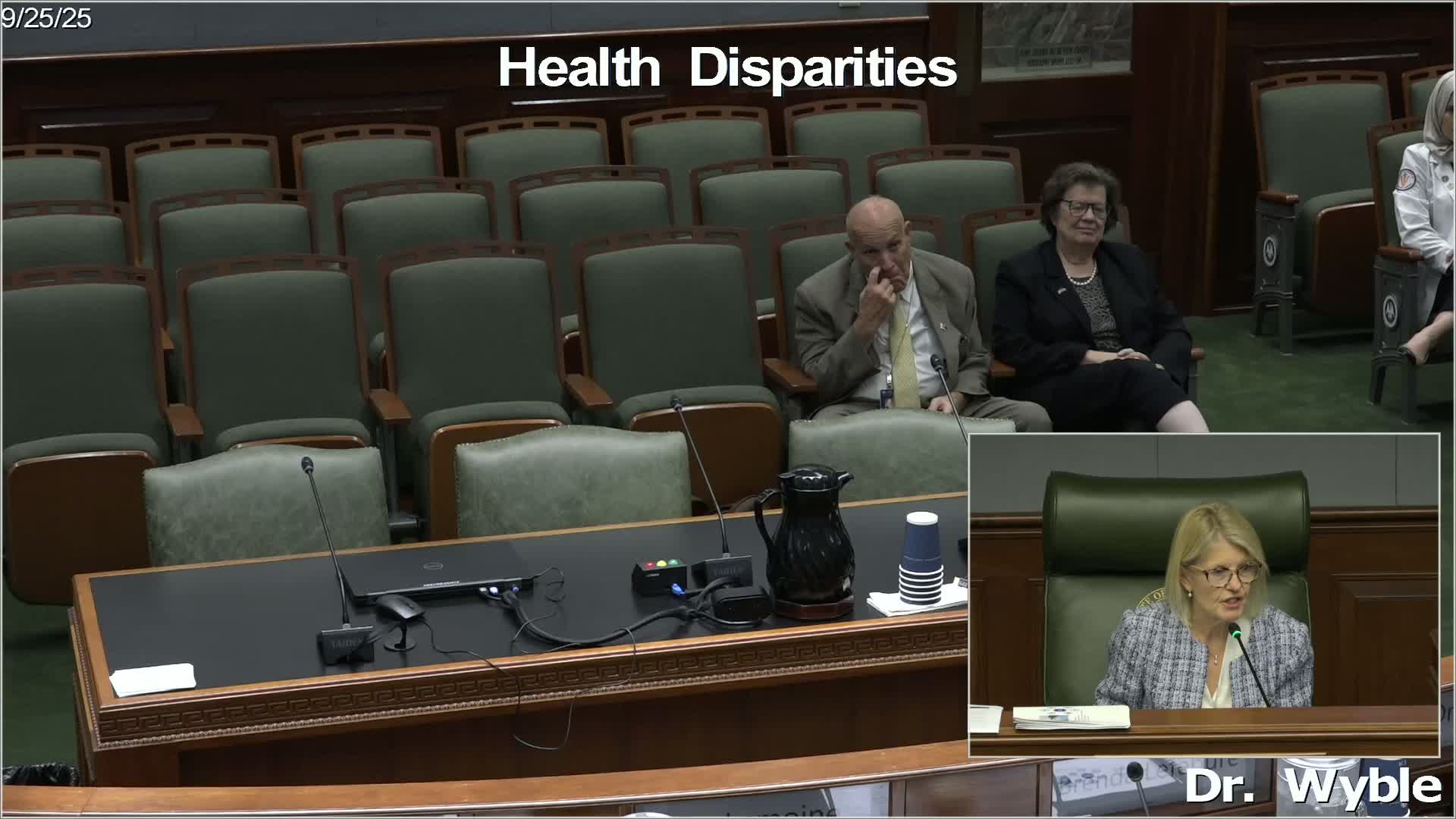
The HCR 55 Rural Health Task Force on rural Louisiana health inequities focused on poverty as the root cause of access problems and moved to shape a rural delivery-care model tied to a pending federal grant opportunity, Chair Karen Bridal said.
The HCR 55 Rural Health Task Force on rural Louisiana health inequities focused on poverty as the root cause of access problems and moved to shape a rural delivery-care model tied to a pending federal grant opportunity, Chair Karen Bridal said.
The task force said the model would combine social-determinants-of-health (SDOH) services, expanded use of mobile clinics and community health workers, and regulatory or legislative changes to license nontraditional care delivery — all aimed at improving access in parishes with high poverty rates. Julie Foster Hagen, executive director for the Transformation Task Force, told members the federal Notice of Funding Opportunity (NOFO) for rural health would require a full five-year plan and that Louisiana is aiming to submit the application early.
Why it matters: the NOFO could unlock large, multi-year federal dollars and requires measurable milestones each year; members argued those funds should be used to shift care upstream by addressing income, transportation, housing, and other SDOH in rural parishes rather than paying downstream costs in emergency and inpatient settings.
Task force chair Karen Bridal opened the session by framing the problem as poverty-driven: "we are fiftieth in the country," she said, and urged the group to treat poverty as the core ideology behind disparities rather than merely a downstream barrier such as lack of transportation. Tom Costanza, representing the Louisiana Conference of Catholic Bishops, described Act 581 (2019), a state statute that created a multi-agency poverty-reduction council with a mandate to coordinate services and compile best practices. "The legislative intent was poverty was an affront to human dignity and that the state had a role in coordination," Costanza said.
Julie Foster Hagen outlined the grant timeline and scale: "we're looking at probably about 200 to $300,000,000 per year over a 5 year period," she said, adding the application deadline in the NOFO is November 5 but the state intends to file October 29. She said the NOFO awards will be re-assessed annually based on performance and that higher future-year allocations will depend on year-one results.
Members described the delivery model as intentionally broad. Proposals discussed included: - Mobile clinics operating as licensed adjuncts to hospitals and rural health clinics so teams can "get out into the communities" rather than relying solely on patient transportation; - Expanded roles for community health workers, social workers and dedicated navigators to build trust and coordinate services in-home and in-community; - Nontraditional benefits and wraparound services (food pharmacies, in-home case management, workforce and housing supports) tied to risk stratification and predictive modeling; and - Pilot programs to decentralize prenatal care while centralizing patient data so hospitals receive consistent prenatal records when patients present to deliver.
Dr. Vincent Collotta described a maternal-health pilot concept he and colleagues are developing to "decentralize care, but centralize data," using community health workers, family practitioners, and parish health unit staff to provide prenatal screening and data collection near patients' homes, with centralized LDH data repositories to avoid duplicate testing and improve continuity at delivery hospitals. Collotta stressed that reducing neonatal intensive care admissions would produce net Medicaid savings.
Region 6 medical director Dr. Christina Lord urged investment in primary care capacity: "I would like to ask for the consideration of hiring a family medicine physician to be placed in every parish health unit" to anchor local services and build continuity of care. Other clinicians recommended integrating behavioral health with primary care and increasing use of doulas and certified nurse-midwives where feasible.
Transportation emerged as a recurring practical barrier. Allison, regional director for the Governor's Office Office of Rural Development, described the Louisiana Rural Infrastructure Accelerator (LORIA), federal partnerships and a November 20 rural transit summit planned in Alexandria to pilot rural mobility solutions and to fund targeted transportation projects to hospitals and clinics.
Task force members agreed on next steps: create a subcommittee to add operational detail (who, how, when, where) to the delivery-care model; provide prioritized data and pilot concepts to the Transformation Task Force; and support the state grant-writing team led by Julie Foster Hagen and Secretary Bruce Greenstein. Bridal said she and Representative Dustin Miller will meet the following day to brief the sponsor and align legislative needs.
The task force did not take formal votes at the meeting; members described planning, coordination and assignments rather than adopting ordinances or binding policy.
The group identified immediate areas the grant application and future pilots must address: SDOH integration, licensing/regulatory changes to support mobile clinics, payment and Medicaid coverage for nontraditional in-home services (including sickle cell and maternal-home care), and a data architecture that centralizes prenatal records while enabling local, parish-level delivery of care.
Julie Foster Hagen cautioned that states must show year-to-year progress: "they're holding our feet to the fire to say, show us the data that you have. Show us the milestones. Did you actually do it?" She said the state must plan both for grant-year performance and for sustainability beyond the five-year funding window.
Members said they would reconvene via the new subcommittee, and Dr. Collotta agreed to return with pilot design details and data at a future meeting. Bridal asked attendees to continue coordinating across agencies, universities, NGOs and hospitals to ensure Louisiana can demonstrate both need and an evidence-based, scalable approach for the federal award.
Ending: The task force framed the rural delivery-care model as a test of whether Louisiana can invest federal dollars, state coordination and local capacity to reduce deep poverty and preventable health crises; the group scheduled follow-up work on the grant application, pilot designs and any needed legislative or regulatory changes.