Get Full Government Meeting Transcripts, Videos, & Alerts Forever!
Get email alerts on the Stadium Field Modernization topic
No spam. Unsubscribe anytime.
Snowline board weighs turf and track upgrades at Serrano: estimated costs, funding sources and Oct. 21 follow-up
Summary
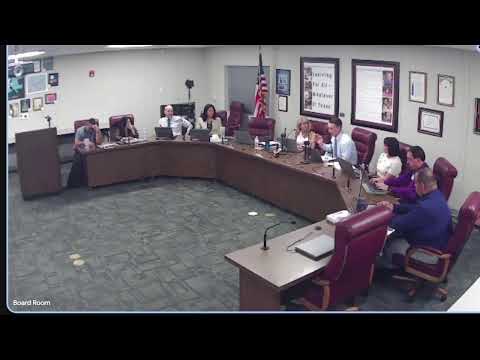
Snowline Joint Unified trustees, administrators and community members debated proposals to modernize Serrano High School’s stadium Friday, weighing a new synthetic track and turf field against continued maintenance and phased grass improvements.
Snowline Joint Unified trustees, administrators and community members debated proposals to modernize Serrano High School’s stadium Friday, weighing a new synthetic track and turf field against continued maintenance and phased grass improvements.
Administrators and staff presented a cost analysis and timetable describing three options: keep a natural-grass field and maintain it at higher levels, install a synthetic track only, or install both a synthetic track and synthetic turf. Bill Flynn, a district staff member who led the analysis, said the district modeled costs over 25 years and assumed synthetic surfaces require replacement about every 12 years while natural grass needs frequent resodding and more labor and water.
Flynn said recent comparable projects put the construction-only cost for a replacement track at about $5.5 million; adding soft costs such as ADA work, restrooms, curbs and fencing could raise that figure and put a full track-and-field project near $7.5 million in current dollars. Flynn said his 25-year projection produced a lifecycle cost of roughly $11.6 million for synthetic track-and-field and about $12.6 million for a maintained natural-grass option, using a 2.5% annual escalation on costs and including periodic replacements and resodding.
Staff emphasized that much of the total cost is driven by site work required by California Division of the State Architect (DSA) and Americans with Disabilities Act (ADA) path-of-travel requirements. Jeff, the district’s construction manager who spoke briefly, said where ADA and access work already exists the price is lower; where those pieces are missing the project scope and cost rise because parking lots, paths, restrooms and curb work must be brought into compliance.
Board members and community speakers raised use and safety concerns. Freddie Johnson, the athletic director at Serrano High School, described deteriorated turf, holes that he said had caused injuries, and heavy community and youth use. Johnson estimated very high cumulative use on the field, saying youth programs and practices have dramatically increased hours of use; he argued that synthetic turf would reduce cancellations, improve safety and help retain student-athletes.
Community email and coach testimony also highlighted potential revenue benefits of upgraded facilities. An email read into the record said hosting winter qualifiers and invitationals could raise several thousand dollars per event — the letter cited a neighboring school that makes about $10,000 from a winter qualifier and more from invitationals — and suggested an upgraded track and turf could support fund-raising for athletics.
On funding, administrators said Measure J — the district bond that voters approved — supplied roughly $70.6 million to the district in staged disbursements; the district has spent or programmed about $51 million to cover eight modernization projects, leaving a portion of bond funds available for other projects listed in the Facilities Master Plan. Flynn presented a cash-flow scenario showing disbursements planned across multiple years and described an option to borrow short-term (a bond anticipation note) or to temporarily use $17 million in the general fund that board members had set aside for facilities projects if the board chose to accelerate stadium work.
Staff urged the board to make a direction by Oct. 21 if it wanted work to begin after graduation next June. Flynn said the district would need an architect under contract and DSA design work in hand to start construction in June; architect fees are typically 8–10% of project cost and would be awarded through a contract the administration planned to bring to the board for consideration. Geo-architects and other firms that had previously worked on the modernization plans were identified as potential designer partners.
Trustees and staff discussed alternatives intended to reduce stress on the stadium field, including—briefly—purchasing or improving a separate practice field to shift some practices off the stadium turf. Staff cautioned that any additional field on district property could trigger DSA and path-of-travel costs and might therefore approach the same cost structure, depending on site conditions.
The board did not make a formal decision on construction. Instead trustees agreed to return Oct. 21 with more precise cost estimates and, if directed by the board, a contract for architectural services to begin DSA work. Several trustees asked that administration provide hard bids or a contract for an architect before the Oct. 21 meeting to allow an informed vote; Flynn and the construction manager said real construction bids would follow schematic design and DSA review and could take months to produce.
Why it matters: Serrano’s field is used by interscholastic athletics, physical education and numerous community youth programs; administrators said heavy use and limited grow time for natural turf have degraded playing surfaces. The decision affects facility safety, recurring maintenance budgets, bond-program cash flow and the district’s ability to host revenue-generating events.
What’s next: The administration will return to the board’s Oct. 21 meeting with additional cost detail and, if the board directs, a proposed contract with an architect to begin DSA and design work for a stadium project to start after the 2026 graduation season.