Get Full Government Meeting Transcripts, Videos, & Alerts Forever!
Get email alerts on the Street Safety topic
No spam. Unsubscribe anytime.
Southborough board approves removal of two Norway maples, stonewall remnants for Richards Road crosswalk
Summary
The Planning Board and Tree Warden approved removing two 18-inch-diameter Norway maples and roughly 10 feet of stonewall remnants on Richards Road to install a crosswalk with rapid‑flashing beacons, citing sight‑distance and school‑route safety concerns. The decision was conditioned on filing a notice of decision with the town clerk.
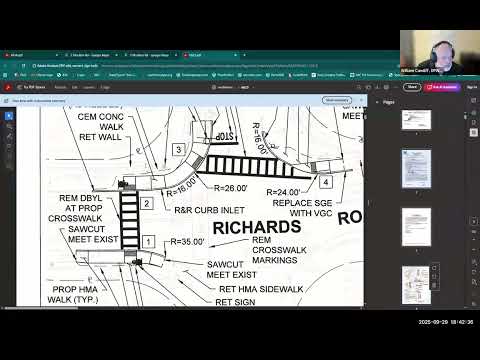
Southborough — The Planning Board, sitting jointly with Tree Warden Christopher Leroy, approved removal of two Norway maple street trees and about 10 feet of stonewall remnants on Richards Road at Killam Farm Lane to make way for a new pedestrian crossing with rectangular rapid‑flashing beacons, the board decided Monday night. The board voted to close the public hearing and directed staff to file a short notice of decision with the town clerk.
Safety concerns prompted the project. Christopher Leroy, the town tree warden, told the board the location was a candidate for a crosswalk because residents had called about sight‑distance problems and the intersection serves pedestrians walking to and from a nearby school. “This is a joint hearing between the planning board and the tree warden for these 2 trees on Richards And Killam Farm Lane,” Leroy said at the start of the presentation.
The plan presented by town public works staff shows two 18‑inch‑diameter Norway maples within the town layout and a narrow band of original stone wall remnants that lie in the right of way. The DPW said it must remove the trees and clear the stone remnants to construct a sidewalk cross section that meets current PROWAG accessibility standards and to place the RRFB crosswalk at the planned location.
The board received written input before the hearing. Roxanne Modi emailed, “I fully support the tree removal so we can get some relief from speeders flying down Richards Road.” Linda David wrote that removal would “allow the installation of the RRFBs and crosswalk,” and noted the location is a school zone and busy bus stop. One resident, Anne Marie Sampson, emailed: “If they are not a hazard, I would object to their removal.” Town staff and the board discussed whether that message constituted a formal objection under state procedure; the board left the legal interpretation of that statement to the tree warden and town counsel and proceeded with the vote.
Board members and staff discussed mitigation and reuse of the stone. DPW staff said the contractor would own removed stones under the contract but that the town could request that stones be set aside for municipal reuse; staff offered to coordinate a DPW pickup if the contractor would set material aside. The DPW also said it routinely plants replacement trees where feasible but noted limited right‑of‑way space in older parts of town and suggested concentrating replacement plantings on other town properties, such as the town center.
After discussion the board moved and seconded a motion to approve the tree and stonewall removal; the motion passed. The planning office said it will prepare a short notice of decision to be filed with the town clerk and provided to the DPW so construction and removal may proceed under the town’s permitting process.
Why it matters: the crossing is on a frequently used school route and at a bus stop; the board cited sight‑distance and pedestrian safety as the primary reasons for approving the removals.
What’s next: staff will file the notice of decision with the town clerk and coordinate with DPW on removal logistics and any tree‑planting or stone reuse arrangements.