
Parents, students and coaches urge district not to convert Los Altos High tennis courts into parking
Get AI-powered insights, summaries, and transcripts
Subscribe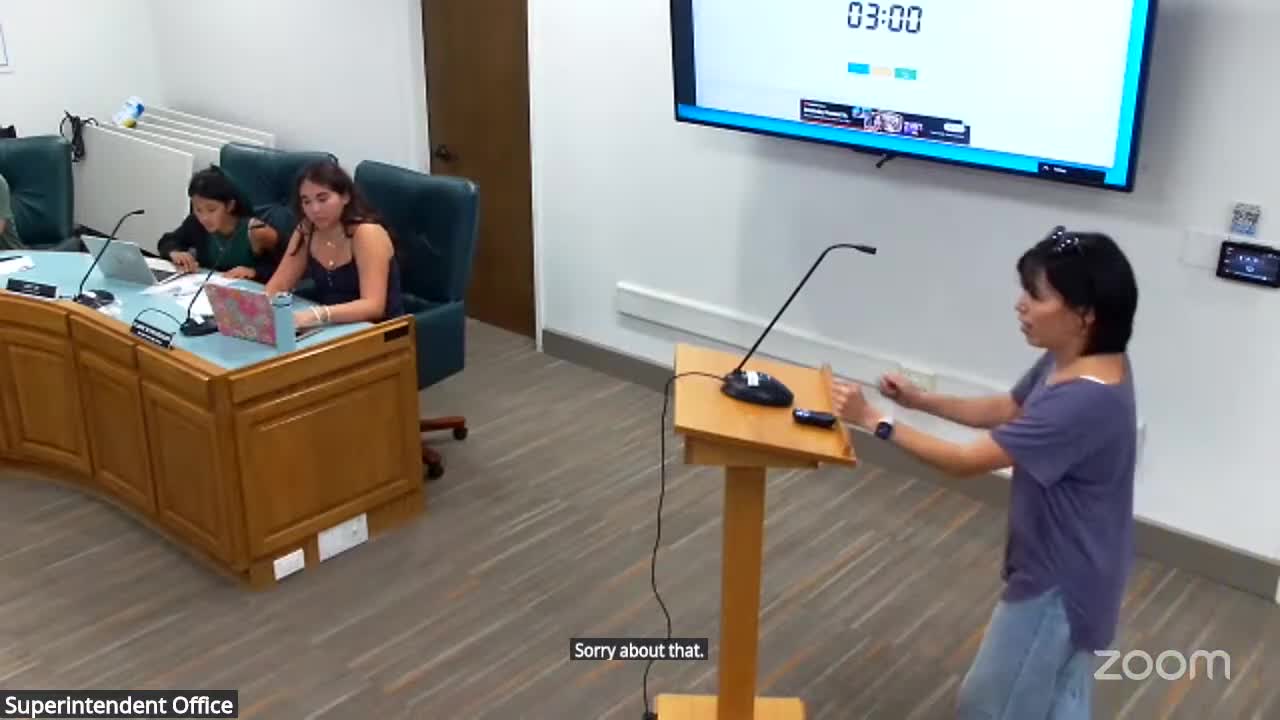
Summary
At the Sept. 29 Mountain View–Los Altos board meeting, multiple parents, students and coaches urged trustees to preserve Los Altos High School’s tennis courts and not convert them into parking, citing heavy court usage, student participation and neighborhood congestion concerns.
At the Sept. 29 Mountain View–Los Altos Union High School District Board of Trustees meeting, more than a half dozen parents, students and coaches urged the board not to convert tennis courts at Los Altos High School into parking, saying the courts are heavily used by students and the community and that converting them would worsen neighborhood traffic.
Theda, board president, opened the public-comment period and said the board could not answer questions on items not on the agenda because of the Brown Act. That admonition did not stop residents, student-athletes and coaches from making the case to keep the courts intact.
“Adding additional parking spot will only make an additional mess,” said a speaker who identified herself as a tennis player and member of the Los Altos High sustainability committee. She urged the board to find alternatives such as stricter street-parking enforcement and better permit management rather than removing recreational space.
Steve Apfelberg, a tennis coach at Los Altos High School, provided usage data from the program and community. “We typically have 50 to 60 players who come out for the team,” Apfelberg said. “When I left tonight, there were 45 [people] on the courts before dark. The courts were packed.” He said the size of the program means limited court space forces cuts and reduces opportunities for students to participate.
Student and parent speakers described weekend and after-school demand. “The tennis courts are used every weekend; they’re full,” said parent Fernando Mojica, noting families routinely use the facilities. Luke Byrne, co‑president of the Los Altos High Green Team, told trustees that creating parking would encourage more driving and increase congestion, and urged investment in safer bike lanes as an alternative.
Other residents emphasized the courts’ role in student wellness and inclusion. “All students get to use the tennis courts,” said Leah Pamer, a Mountain View resident, adding that just over 10% of students drive to school and that converting courts into parking would primarily benefit a small, wealthier subset of students.
Several speakers also raised safety concerns about locating parking near the East Driveway and Jardi, where traffic is already congested, and warned that more spaces could increase pollution near playing fields. Sybil Kramer, a longtime volunteer and member of the district sustainability panel, told trustees that parking next to soccer and softball fields would pose risks when students gather during breaks.
Board members did not take action on the tennis-court proposals during the meeting. Theda told commenters that the board could not respond in detail because the topic was not on the posted agenda, citing the Brown Act. No motion or vote regarding the courts or parking was recorded on Sept. 29.
The public-input period included multiple requests that the district coordinate with city officials and neighborhood stakeholders to seek alternatives to converting athletic space into parking, and to study options such as improved permit enforcement or creating bike infrastructure to reduce driving.
If trustees schedule the matter for a future agenda, the board will have the opportunity to hear staff analysis and any proposed plan for converting district property. For now, speakers asked trustees to preserve the courts and to consider the broader community and student-access impacts before making changes.
Ending: The board’s next regular meeting is Oct. 13; several speakers asked the district to place a fuller discussion on a future agenda so trustees can hear formal options and data about parking demand, court usage and traffic impacts.