
Mayor Trantalis Highlights More Than $10 Billion Downtown Investment, $2 Billion Bahia Mar Redevelopment and New Tourism Anchors
Get AI-powered insights, summaries, and transcripts
Subscribe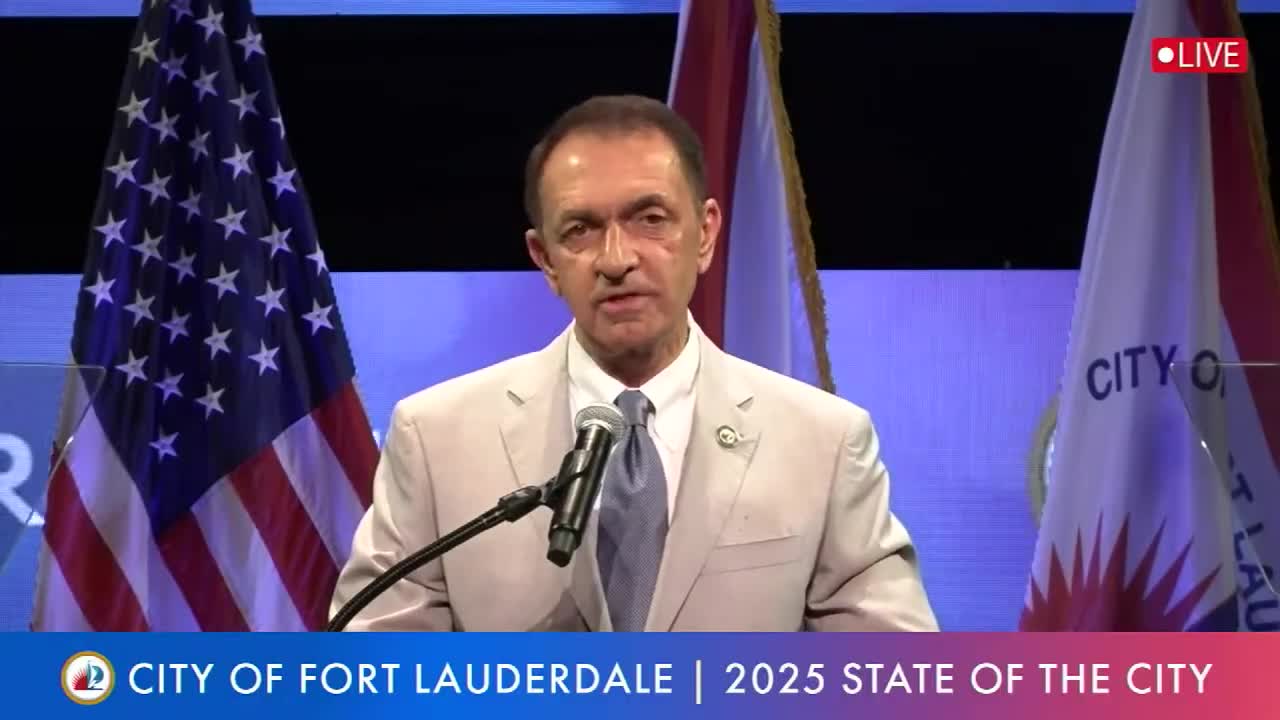
Summary
The mayor said more than $10 billion has reshaped downtown Fort Lauderdale and highlighted large private projects — including a $2 billion Bahia Mar redevelopment, Pier 66 renovation, and new hotels and marinas — as drivers of jobs, visitor growth and downtown residential families.
Mayor Dean Trantalis said downtown Fort Lauderdale has seen more than $10 billion in investment in recent years and described private and public projects that he said are transforming the city's economy and tourism base. Nut graf: The address emphasized private development — luxury residential towers, hotels and mixed‑use projects — and public investments in parks and facilities as central to downtown's growth, plus plans to keep major events like the Fort Lauderdale International Boat Show in place. Trantalis cited downtown metrics: 83 percent growth in families with children since 2018, a rise in downtown overnight visitors from 7 percent to more than 30 percent of city hotel stays, and a $43,000,000,000 annual economic impact attributed to downtown activity (figures cited by the mayor). He named several private projects by developer or brand: the Bahia Mar redevelopment — described as a $2,000,000,000 plan that will add a St. Regis hotel, residences and a revitalized marina — Pier 66 restoration and reopening, Tavistock's Seventeenth Street resort project, and other planned luxury towers (Ambelle, Viceroy) and mixed‑use sites (AIMCO on the former Sears site). The mayor also noted cultural and tourism anchors: the Museum of Discovery and Science, NSU Art Museum, the Brower Center for the Performing Arts, and the Fort Lauderdale Aquatic Center — where he said world records were set during a recent meet. He said the city worked with developers on terms to "get a good deal for the city" at Bahia Mar and emphasized preserving the boat show at its historic location. Trantalis discussed workforce and industry recruitment: the 60‑acre immersive media project (Infinite Reality/Napster) to reclaim a Superfund site with 100,000 square feet of production studios and up to 1,000 jobs, and the county's expanded convention center and Omni Hotel as future demand drivers. Ending: The mayor framed the projects as part of a renaissance that combines family‑friendly downtown living, cultural amenities and high‑wage jobs, noting that private investors and philanthropic gifts have supported public venues and programming.