
Fort Lauderdale to Add Homelessness Staff, Expand Policing Technology and Open New Police HQ, Trantalis Says
Get AI-powered insights, summaries, and transcripts
Subscribe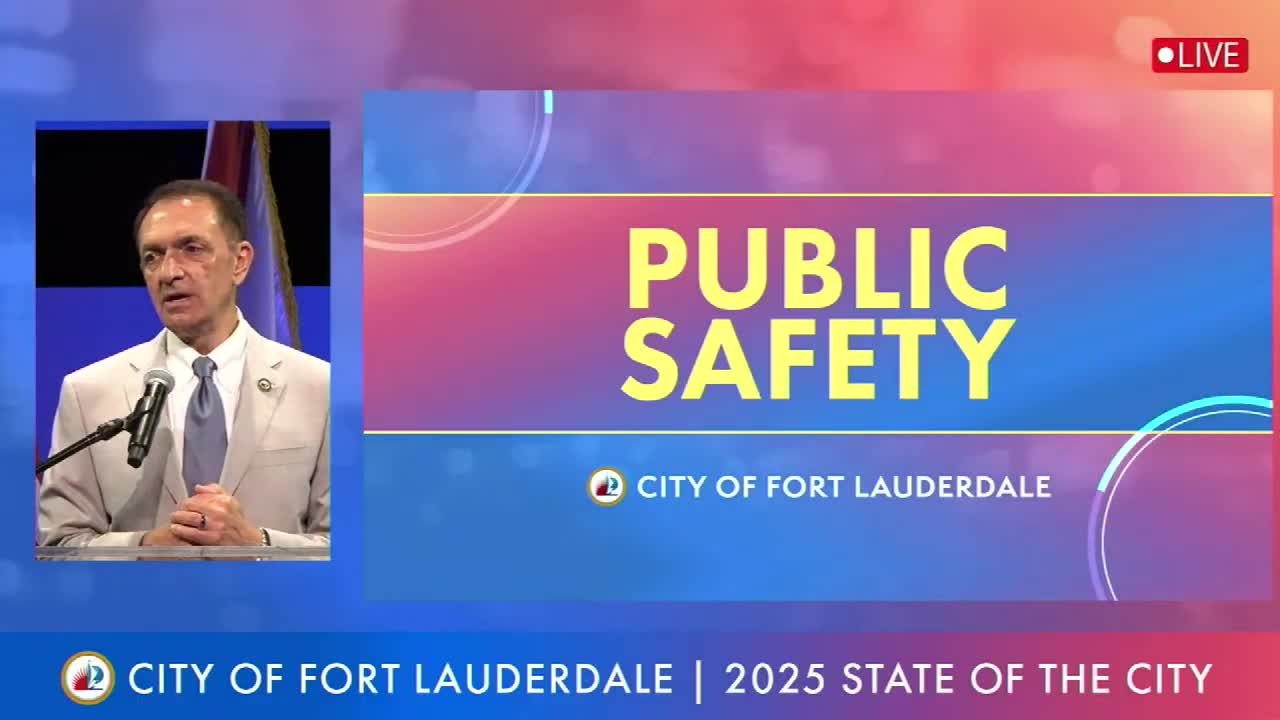
Summary
The mayor announced seven new homelessness staff positions, expanded policing technology including ShotSpotter coverage and a planned new police headquarters, while highlighting arrests and enforcement actions on waterways and outreach successes for formerly unhoused residents.
Mayor Dean Trantalis said Fort Lauderdale is expanding both enforcement tools and support services to address crime and homelessness, announcing new staff and investments in technology and facilities. Nut graf: The speech combined crime‑fighting measures — a specialized gun intelligence unit and expanded ShotSpotter coverage — with a retooled homelessness response that adds staffing and reorganizes outreach into three pillars, reflecting a dual approach of enforcement and service. Trantalis said the city created a gun intelligence unit, expanded ShotSpotter coverage to seven square miles and invested $1,600,000 in new police equipment and technology, including CCTV and vehicle stop barriers. He said the marine unit and U.S. Coast Guard partnered on an operation that boarded 111 boats, shut down nine illegal charters, stopped seven unsafe voyages and issued more than 100 citations. On homelessness, the mayor said the city sheltered more than 80 people, helped 18 secure housing, reunited 41 people with families and that police outreach officers facilitated 34 unifications. He announced an expansion of the homelessness response starting Oct. 1 with seven new full‑time positions — bringing the team to 20 — reorganized into street engagement, intensive outreach and program services. "This is about building a system that is smarter, stronger, and more compassionate," Trantalis said. The mayor welcomed three people who described personal recovery journeys onstage: Jakari Burgess, Tyson Sherrill and Sean Gannon. Burgess, introduced as a U.S. Air Force veteran, and the others spoke briefly about recovery programs and employment placements the speech said they received. Trantalis also said the city is constructing a new police headquarters to house more than 700 sworn and civilian personnel, with evidence storage, training and community meeting spaces; he said contractor errors caused delays and the city is holding those responsible to account. Ending: The mayor framed the measures as a balance of enforcement, technology and services intended to reduce violent crime and address homelessness through arrest alternatives, outreach and permanent housing outcomes.