
Metro vice mayor seeks Accenture contract to study council operations ahead of possible size change
Get AI-powered insights, summaries, and transcripts
Subscribe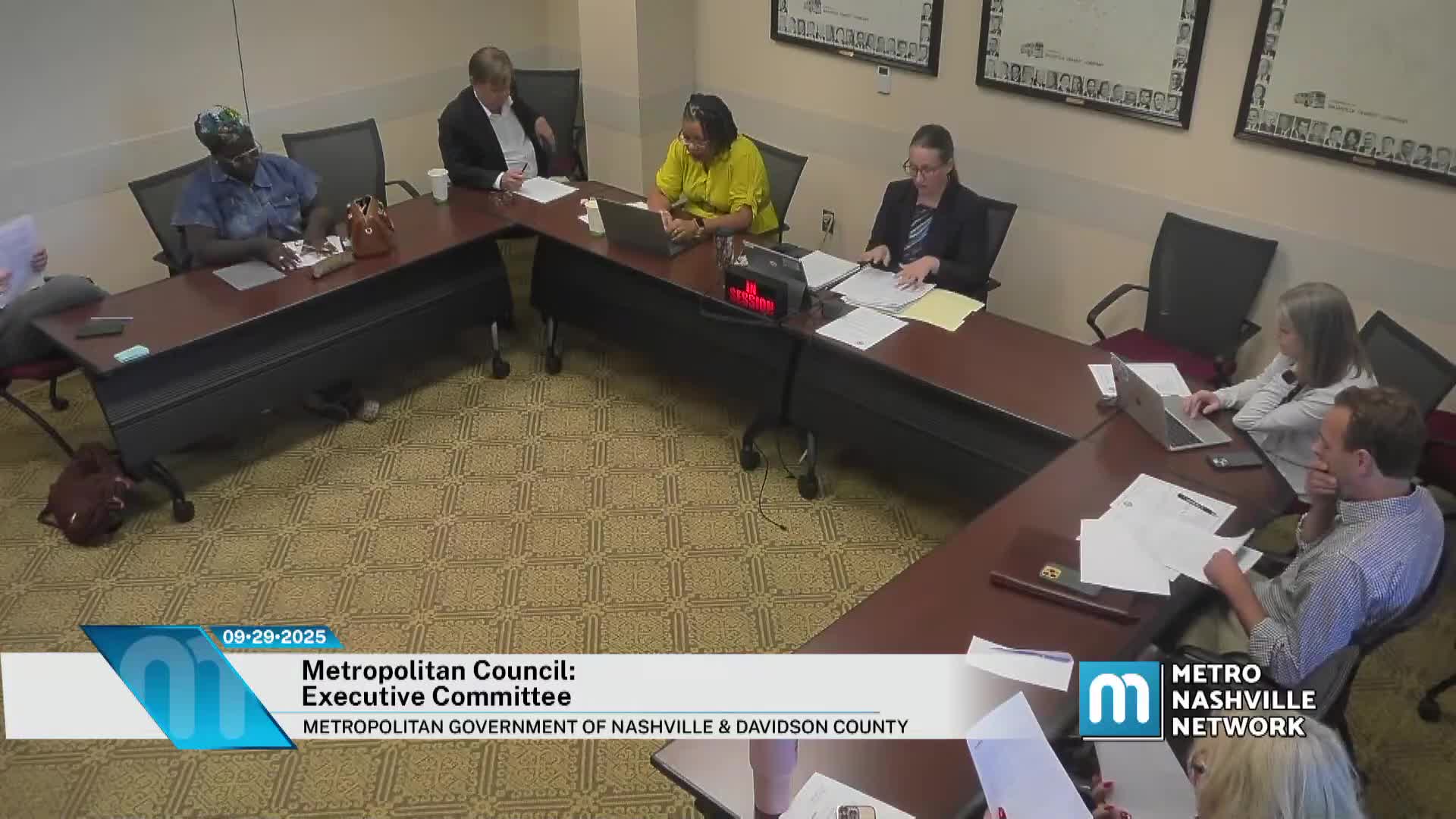
Summary
The vice mayor told the executive committee she plans to file a resolution authorizing use of a cooperative purchasing master agreement with Accenture to conduct an operational analysis of the council office; the work will begin with a fact-finding phase and further phases would depend on a pending Supreme Court ruling about council size.
The Metro vice mayor told the executive committee on an executive-committee meeting that she intends to file a resolution accepting the terms of a cooperative purchasing master agreement with Accenture to perform an operational analysis of the Metro Council office. The resolution, as described at the meeting, would authorize engagement under an existing cooperative purchasing contract and initiate a phased study beginning with fact-finding about current operations.
The vice mayor said the first phase will be a “fact-finding analysis” that includes staff interviews, benchmarking against peer city council offices and department input, and that any subsequent phases would be determined later. “Phase 1 is really fact finding. It’s interviewing. It’s asking what kind of resources can be brought to bear for the current office,” the vice mayor said. She repeated that the study does not presume a change in council size but is intended to prepare the office for multiple possible futures.
Why it matters: the study is framed as preparatory work should a future court ruling or other action require the council to consider resizing. The vice mayor and members stressed the work is advisory and that legal and human-resources issues would remain the responsibility of Metro’s Legal and HR departments.
Committee members asked for clarity about scope and pace. Chair Cash said the Accenture materials looked “very prescriptive” and raised the question of what the consultant would understand the assignment to be at the start of the engagement. “They’ve got a process…and in 10 weeks we’re gonna have five actionable outputs,” Chair Cash said, adding concern that the body should be clear about the initial scope before staff are interviewed. The vice mayor answered that the procurement response had been intentionally non‑prescriptive and that the scope would be refined with committee and council input after the cooperative agreement is accepted.
Members also discussed the potential timing if the U.S. Supreme Court issues a decision affecting council size. A member asked whether the consultant engagement could produce practical planning work — for example maps or public‑facing timelines — early enough to avoid a rushed process. The vice mayor said the chosen consultant has experience with similar multi‑stakeholder processes and that part of the engagement could include timeline and public‑engagement planning, though legal advice would be provided by the Metro Law Department. “We are asking them to advise us on a process,” the vice mayor said. “They are not giving us legal advice.”
The vice mayor requested that executive committee members consider cosponsoring the resolution and, if so, to sign onto the legislation by 11:00 a.m. the following Tuesday to appear on the next council agenda. No formal committee vote on the resolution occurred during the meeting; committee members were asked to review the 250‑page procurement packet and indicate their interest in cosponsoring.
Background details discussed at the meeting included the procurement path used (an initial check of on‑call Metro contractors, followed by a cooperative purchasing solicitation) and that the National League of Cities will run parallel benchmarking surveys. Committee members emphasized the need for a phased, transparent scoping process so staff are not surprised by interviews and so the council can set realistic public timelines if subsequent phases are needed.