Get Full Government Meeting Transcripts, Videos, & Alerts Forever!
Get email alerts on the Language Revitalization topic
No spam. Unsubscribe anytime.
Speakers mark Indigenous Peoples' Day; Salish School of Spokane outlines Salish language immersion plans
Summary
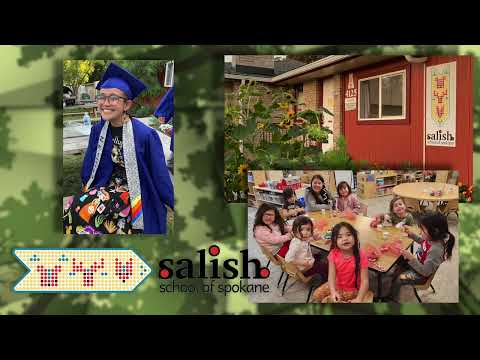
Speakers acknowledged Indigenous Peoples' Day and Bria Desotel, co-executive director of the Salish School of Spokane, described the school's Salish immersion programs, adult education work and plans to build a new campus near the Spokane River.
Speakers at a public observance acknowledged Indigenous Peoples' Day and described ongoing Salish language revitalization efforts in Spokane. Bria Desotel, co-executive director of the Salish School of Spokane, said the school operates immersion programs for children and adults and is planning a new campus along the Spokane River.
A staff member offered a land acknowledgment, saying, “Indigenous Peoples' Day is a time to recognize the first stewards of the land and the deep history that continues to shape our region. Spokane sits on the ancestral land of the Spokane tribe.” The speaker also recognized the neighboring Coeur d'Alene, Kalispel and Colville Confederated Tribes and noted Spokane’s large urban Native population.
Bria Desotel described the school’s structure and goals. “At Salish School Spokane, we serve children aged 12 all the way up to currently 13 years. We operate a full Salish immersion preschool, early preschool elementary program, as well as a adult education program,” she said. She called the organization’s work “dynamic Salish revitalization,” and said staff are focusing on connecting adults, parents and families to the language so they can lead by example.
Desotel said the school is planning a new facility near the Spokane River to accommodate growth and to build what she described as a Salish village to support a full immersive cultural and lifestyle environment. “This will allow our students and our families and community to be able to be near the river and to continue to expand and then just, you know, build this dream of having a Salish village,” she said.
The remarks were descriptive and did not include a formal vote or action; no funding sources, timelines or approvals for the proposed campus were specified during the remarks.