Get Full Government Meeting Transcripts, Videos, & Alerts Forever!
Get email alerts on the Personnel And Human Resources topic
No spam. Unsubscribe anytime.
Council reviews personnel budget; approves $1,000 CSEA education incentive and discusses recruitment hurdles
Summary
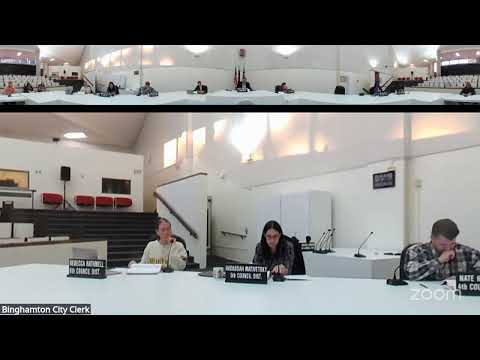
At a Binghamton City Council Committee of the Whole budget hearing Oct. 9, Kent, the personnel presenter, reviewed the personnel budget and described a new $1,000 education incentive added under the CSEA contract.
At a Binghamton City Council Committee of the Whole budget hearing Oct. 9, Kent, the personnel presenter, reviewed pages 30–31 and described a largely stable personnel budget that includes a new, modest education incentive introduced under the current CSEA contract.
The nut graf: The council focused questions on the new education incentive, medical-services costs related to hiring, a recent personnel vacancy that was being updated in budget materials, and persistent recruitment difficulties for engineering positions.
Education incentive and training pool: Kent said the budget includes a new $1,000 education incentive line created under the CSEA contract to fund training or certifications for bargaining-unit employees across departments. “That’s a new line ... it’s a general unallocated pool for CSEA training,” Kent said. He explained requests would be vetted with supervisors to ensure relevance to job duties.
Medical services and testing costs: Kent told council members the increase in the medical services line reflects contractual work with UHS for preemployment physicals, drug testing (including random tests), and post‑motor‑vehicle‑accident testing. He said the cost varies with hiring volume and that recent hiring in police and fire accounted for a significant share of the increase.
Vacancy clarification and staffing: Council members asked about an apparent vacancy in the personnel and civil service assistant role. Kent clarified that the civil service administrator, Jamie, handles exams and vetting while Kelly covers personnel assistant duties; the department will update budget labels that still showed the role as vacant. A staff member confirmed, “It’s not actually a vacant position in the department,” and said the record would be corrected.
Recruitment challenges for engineering: Multiple council members raised concern about persistent vacancies in the engineering department, including an unfilled deputy engineer post. Kent and others said salary competitiveness is a key constraint because many municipalities do not place engineers under the CSEA collective bargaining unit and thus have more flexibility on pay. The presenters said resolving the issue would likely require negotiations or adjustments that could be costly and would require agreement by union or civil-service stakeholders. Council members warned extended vacancies could slow or halt capital projects.
Training and travel: Kent said travel and training lines remain modest but noted the department uses both state and vendor-provided training resources, including leadership and supervision programs and an EAP training library, and that some premium or in-person programs incur additional costs.
Next steps: Council members had no motion to close pages 30–31 and asked staff to correct the personnel-role labeling and provide follow-up information about recruitment strategies for hard-to-fill positions.
Ending: Staff will update budget materials to reflect the personnel-role correction and the council signaled interest in further discussion about recruitment and training priorities.