Get Full Government Meeting Transcripts, Videos, & Alerts Forever!
Get email alerts on the Historic Preservation Code Enforcement topic
No spam. Unsubscribe anytime.
City staff says Panama City Grammar School remains subject to code enforcement; funding options, nuisance assessments discussed
Summary
City staff told residents and property owners the grammar school property is believed to be out of compliance and explained the nuisance‑assessment lien and tax‑certificate process being used to recover abatement costs; the CRA will consider potential funding pledges.
Residents and city staff discussed the status of the Panama City Grammar School and the mechanics of using city abatement funds and nuisance‑assessment liens to address long‑standing code violations.
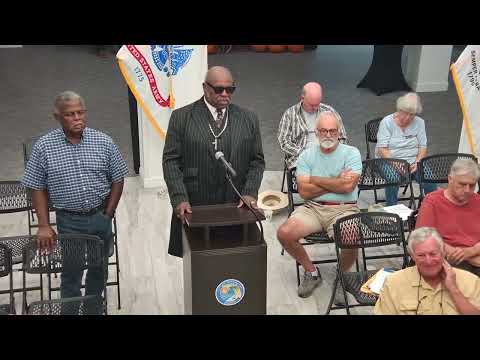
At the town hall a local attorney and resident speakers urged caution before the city contributes money to a private owner to repair the Grammar School’s roof. “Before the city just contributes a roof and then waits another 5 or 10 or 20 years for something to happen, I think you all should think very seriously about meaningful quid pro quo’s for any kind of effort to sustain this property,” one speaker said.
City Attorney Nevin Zimmerman said the city has ongoing code‑enforcement actions and that staff believes the property is not in compliance. Zimmerman described outreach to the property owner’s representatives — including a Zoom meeting with the owner’s counsel and circulation of existing code‑enforcement orders and files — and said the owner’s law firm is reviewing the city’s records.
On funding, Zimmerman explained the city’s nuisance‑abatement and lien process: the city would spend funds to abate nuisances, record a nuisance‑assessment lien, and later attempt to recoup those costs through the tax‑bill process or sale of tax‑certificate liens. He said the CRA and the Downtown Improvement Board (DIB) were asked whether they would pledge funds to finance proactive abatement; the CRA planned to consider the question at an upcoming meeting.
Zimmerman described the tax‑certificate process used to recover unpaid taxes and assessments, noting that when a tax certificate is sold the city typically recovers owed taxes and assessments. He also said not all abatement actions result in demolition; abatement choices depend on scope and historic status.
Staff said they will continue to coordinate with the property owner’s counsel and bring potential funding or abatement actions to the CRA and commission as required. The city asked interested residents to follow the CRA agenda for upcoming decisions on funding pledges.