Get Full Government Meeting Transcripts, Videos, & Alerts Forever!
Get email alerts on the Plea Withdrawal Coercion topic
No spam. Unsubscribe anytime.
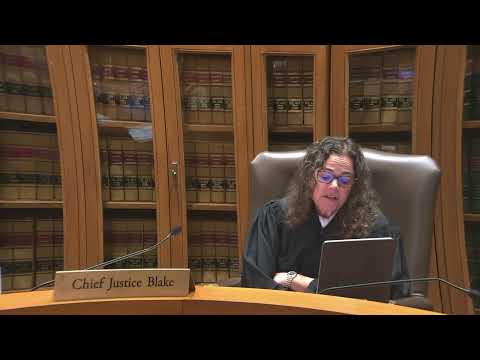
Appeals Court hears plea-withdrawal arguments in Charles Price's case; panel reserves decision
Summary
In Commonwealth v. Charles B. Price (docket 25P109), the Appeals Court heard arguments over whether an 18-year-old's plea was coerced by the threat of a sentence later deemed unlawful under cases cited by defense counsel (including Mattis). Defense argued the plea was involuntary given the sentencing framework and youthful vulnerability; the Co
The Appeals Court panel heard argument in Commonwealth v. Charles B. Price, docket 25P109, on whether Price's guilty plea should be withdrawn as involuntary because the defendant faced a sentence that counsel says was unconstitutional under recent Supreme Judicial Court decisions (counsel cited "Mattis" and related authorities). Defense counsel Catherine Orin argued that the threat of an unlawful, "cruel and unusual" sentence and the defendant's age and developmental characteristics made his plea involuntary; the Commonwealth's attorney (identified in the transcript as Attorney Lynn) urged denial and cited Brady and Dingle and other precedent holding that later invalidation of a sentence typically does not render a plea involuntary. The panel took the case under advisement.
Orin framed the central claim as factual and legal: she said Price, who was 18 at the time he pleaded, was subject to a sentencing threat that was "tantamount to a death penalty" and that the retroactive legal developments clarified in Mattis made the original threatened sentence unlawful. Orin argued those facts, combined with research about adolescents' susceptibility to coercion and "hot-cognition" decision-making, made this more than an ordinary "fear of a harsh penalty" plea-withdrawal claim. She said Price accepted a negotiated second-degree sentence "with possibility of parole after 15" and that Price has since been paroled; the precise parole date was not specified in argument.
The Commonwealth responded that historic precedent (Brady, Dingle, and decisions cited in the Commonwealth's brief, including Wentworth) holds that a plea taken to avoid an allegedly harsher penalty does not automatically make the plea involuntary when that penalty is later invalidated. Lynn told the panel those authorities control and that the plea remains legally valid despite subsequent developments in sentencing law.
The justices questioned counsel about doctrinal limits and practical consequences. Orin sought to distinguish Price from ordinary plea-withdrawal cases by tying Mattis's discussion of adolescent psychology and sentencing unlawfulness to the plea context; the Commonwealth argued that Chisholm and other recent SJC decisions limit Mattis's application. The panel also discussed whether the trial court applied correct Rule 30 standards at the withdrawal hearing and whether the motion judge's reasoning relied on speculative "floodgate" concerns rather than the case's specific facts.
After extended argument from both sides, the court thanked counsel and took the matter under advisement; no ruling was announced from the bench. The court then recessed briefly and cleared the courtroom as previously announced.