Get Full Government Meeting Transcripts, Videos, & Alerts Forever!
Get email alerts on the Criminal Justice Stays topic
No spam. Unsubscribe anytime.
Appeals Court hears arguments over stay of sentence for Markinson Lafleur; case taken under advisement
Summary
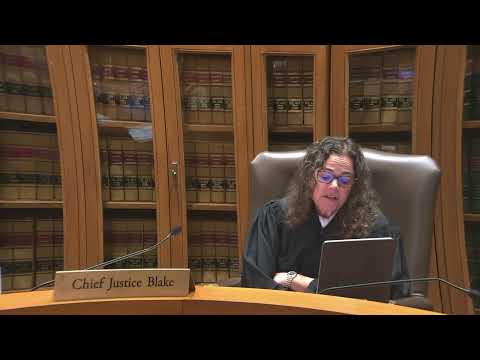
Chief Justice Amy Blake and a three-justice panel heard argument in Commonwealth v. Markinson Lafleur (docket 25P758) on whether a single justice erred in vacating a trial court's stay of sentence; the court took the case under advisement.
Chief Justice Amy Blake and two colleagues heard oral argument Tuesday in Commonwealth v. Markinson Lafleur, docket 25P758, on whether a single justice erred in vacating a trial court's stay of sentence pending appeal.
The dispute centers on whether the single justice appropriately weighed individualized "security risk" factors (family ties, employment, monitoring conditions) or instead treated the crime of conviction and the mandatory 10-year minimum as dispositive. Defense counsel Emma Quinn Judge asked the panel to reverse the single justice's decision; Assistant Attorney Ellen Lazar represented the Commonwealth and urged affirmance. Chief Justice Amy Blake told counsel, "we have read all of your materials, so our suggestion is that you get right to your argument." The court took the matter under advisement following argument.
The issue matters because the single-justice review governs when a defendant may remain free while an appeal is pending. Quinn Judge told the panel that the trial court previously stayed Lafleur's sentence and had found mitigating factors on the record (employment, family ties, GPS monitoring, passport surrender) that should have carried weight. She argued the single justice's ruling contained only a short paragraph addressing security factors and relied chiefly on the serious nature of the convictions and the resulting sentence. "When we only look at the crime of conviction, we are no longer conducting an individualized determination," Quinn Judge said.
Lazar for the Commonwealth replied that the defendant's circumstances had materially changed because he had been convicted of multiple serious counts and faced two 10-year terms, without credit for time served. Lazar said the sentence and the gravity of the offenses create a significant incentive to flee and that Justice Brennan (the single justice) properly concluded the defendant failed to prove there was no security risk. She characterized the single justice's conclusion as the judge's finding that the defendant "has not established that he does not pose a security risk."
During argument, the panel pressed both sides on the applicable standards. The court and counsel discussed precedents the parties cited, including Nash, Hodge, Khalilah (as cited by counsel), Penny, and Cromwell v. Springfield, and whether the first prong of the stay standard is reviewed de novo while the second prong is reviewed for abuse of discretion. The defense emphasized deference to trial-court observations about the defendant's roots in the community; the Commonwealth emphasized changed incentives after conviction.
Counsel and the justices also debated factual points relevant to flight risk and public safety: the presence of school-aged children, GPS monitoring and passport surrender, steady employment in a family restaurant, and the defendant's compliance with pretrial conditions. Chief Justice Blake and the other justices asked whether GPS monitoring and passport surrender could be sufficient to reduce flight risk, and whether the single justice had adequately explained how he weighed mitigating evidence.
The court did not rule from the bench; after extended argument the panel said it would take the remainder of the parties' argument on the briefs and the case was placed under advisement.
The panel moved on to other docketed matters following the submission of briefs; no decision in Lafleur was announced at the hearing.