Get Full Government Meeting Transcripts, Videos, & Alerts Forever!
Get email alerts on the Code Enforcement Collections topic
No spam. Unsubscribe anytime.
Council seeks quarterly reports after committee hears collection shortfalls and new contractor plans
Summary
Council members pressed staff on low collection rates for housing-related fines and fees and asked for quarterly reporting after treasury officials described moving files to a new collection contractor, registration-suspension enforcement and legal avenues such as judgments, tax-bill attachment and in rem procedures.
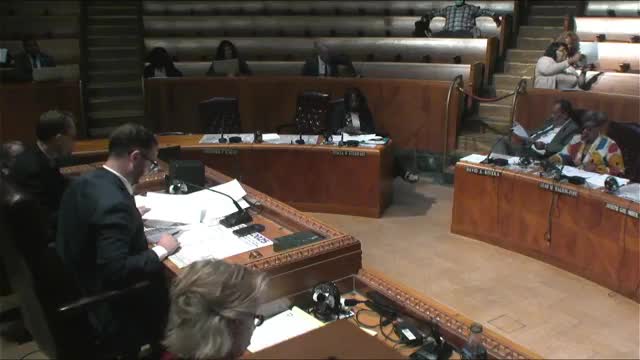
The Committee on Finance debated a resolution requesting reports and testimony on fines, fees and collections on Oct. 7, 2025, after members described low collection returns on housing and code-enforcement fines and asked what city officials are doing to recover outstanding amounts.
Council members said media reporting indicated about $7 million in fines and fees had been issued but only about 8 percent of that amount was collected under previous collection arrangements. Council members said they wanted aggressive action to hold property owners and repeat offenders accountable and to recover funds needed for city services.
Mike Seaman, director of treasury and collections, described a transition from the prior collections contractor (Mercantile, which the transcript indicated was not performing as expected) to a new contractor, RRT. Seaman said the city recently sent files to RRT for adjudication, parking, accounts receivable and housing court judgments; some files (TVA, board-ups, clean and demolitions) had not yet been sent.
Acting Corporation Counsel Robert Quinn described legal limits and options. Quinn said adjudication and housing-court fines proceed through legal hearings and that courts can convert unpaid fines into judgments, which then become collectible through a variety of mechanisms (tax-bill claims, in rem proceedings, liens on property transfers and other enforcement tools). Quinn noted collection success is limited in some cases by ownership forms such as LLCs or estates and by individual financial circumstances; he also said courts sometimes consider ability to pay and other mitigating factors in adjudication processes.
Seaman provided specific figures the committee may use for follow-up: 1,179 housing-court accounts with a total balance of about $12,000,544 were being prepared for collections, and parking accounts and other files would expand the portfolios sent to collections (parking: 43,996 accounts, $3,000,788 noted). Seaman said the new contractor will provide monthly reports on letters sent, collections success and challenges, and suggested the committee could receive quarterly summaries. He also said the treasury department will provide the committee a list of the top 10 accounts owing the most (Seaman said that report exists and he would distribute it).
Council members asked about stronger enforcement tools. Quinn and Seaman discussed options including suspension of vehicle registrations for parking adjudication balances, placement of judgments on property records, and potential in rem proceedings to place liens on tax bills; the officials said they were exploring whether thresholds and procedures could be changed (for example, moving from a 5 percent-of-assessed-value threshold to a dollar threshold) to accelerate tax-bill attachments and collection from owners of noncompliant properties.
Council members requested a monthly or quarterly dashboard that tracks collections, files forwarded to collections, and results, and asked for the top-account list. The committee closed discussion and tabled the resolution; staff said they will provide regular reports to the committee moving forward.