Get Full Government Meeting Transcripts, Videos, & Alerts Forever!
Get email alerts on the Municipal Ethics And Legal topic
No spam. Unsubscribe anytime.
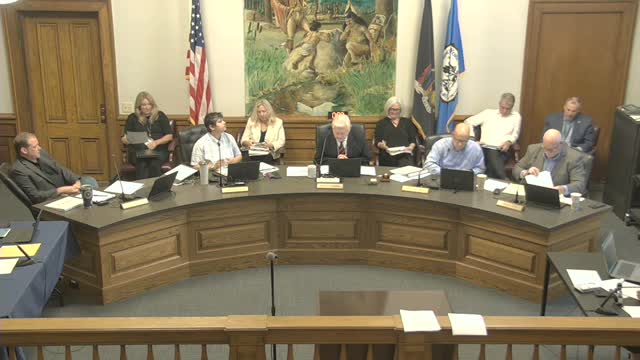
Council debates proposed ordinance to adopt expanded defense and indemnification rules; motion to table fails
Summary
The Saratoga Springs City Council took up proposed Local Law No. 8 of 2025 to expand defense and indemnification rules, introducing language drawn from New York State Public Officers Law.
The Saratoga Springs City Council took up proposed Local Law No. 8 of 2025, an ordinance to amend chapter 9 of the city code on defense representation and indemnification. The mayor introduced the item as intended “to lawfully provide the widest possible scope of defense and indemnification, to our city officers and employees acting within the scope of their public employment.”
The proposed law would align local rules with chapters 18 and 19 of the New York State Public Officers Law, expanding the categories in which the city could provide legal defense and indemnification to officers and employees. The deputy or city attorney (identified in the meeting as Tony) explained that municipalities may adopt these state-law provisions in whole or in part and that the draft mirrors the state provisions in many respects.
Why it matters: Indemnification rules determine whether the city will pay legal fees or provide a defense for employees and elected officials accused in civil or criminal proceedings that arise from their official duties. Changes to those rules can affect individual legal exposure and the city's fiscal risk.
Council debate and a contested provision Several council members voiced concerns about specific language in the draft. Commissioner Moran flagged a line in Section 9.3 that states "this duty to provide for a defense shall not arise where such civil action or proceeding is brought by or at the behest of the city." Moran and others said that language could enable a municipal official or the city itself to initiate a civil action and thereby deny indemnification to the person sued, which raised questions about fairness and potential internal misuse.
Moran moved to table the ordinance until the council could obtain outside legal review; a second was recorded. The council voted on the motion to table and the motion failed (outcome: failed; tally not specified in the public record). During the discussion the city attorney explained Article 19 is the criminal indemnification section of state law and that the draft sought to clarify and expand coverage compared with a prior, narrower local provision.
Procedure and next steps The record shows the ordinance was discussed in open session and the motion to table failed; the transcript does not contain a completed vote to adopt the ordinance on the night's agenda. Council members asked for further legal clarity and some said they wanted outside counsel or additional review to ensure the final language did not create unintended gaps in coverage or potential internal conflicts of interest.
Ending: The item remained under discussion with no final adoption recorded in the transcript. Council members said they would continue deliberations and consider legal input before final action.