Get Full Government Meeting Transcripts, Videos, & Alerts Forever!
Get email alerts on the Behavioral Health topic
No spam. Unsubscribe anytime.
Alamance behavioral health center draws praise and questions over insurance access and scope of care
Summary
Vendors and county officials described patient volumes and fast assessment times at the new Alamance Behavioral Health Center but also fielded complaints that at least one child was turned away over insurance; commissioners asked staff to clarify who the center serves and whether insurers such as Cigna are accepted.
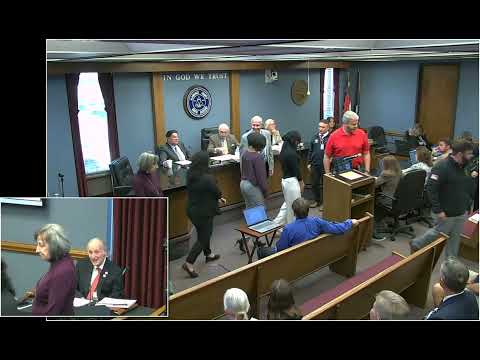
The Alamance County Board of Commissioners heard updates Oct. 6 on the county’s new Alamance Behavioral Health Center, including reported patient counts, referral sources and concerns that at least one child was turned away because the center did not accept the family’s insurer.
Cara Donor, identified in the meeting as regional director of community relations for Avaya Health, told commissioners the center has seen an increase in people assessed and treated since opening and highlighted that most referrals come from self-referral, residential facilities and law enforcement. "In August, the average time to assessment was 37 minutes," Donor said during her remarks. She also said readmissions fell sharply, reporting "14 in July, 1 in August" as an example of early progress.
The center’s intake patterns and insurance acceptance became a focus after a county official said a mother brought a child to the facility and was turned away because the child’s insurer — reported in the meeting as Cigna — was not accepted. A county elected official asked staff to investigate and report back. "We'll figure it out and get back to you," a county official said in response to the complaint.
Commissioners and other speakers repeatedly clarified the center’s role: it is a crisis diversion and stabilization facility rather than a psychiatric hospital with long-term inpatient beds. Several speakers stressed that the center’s 16-bed unit serves temporary, short-term stabilization and that staff should help people needing different levels of care find the next appropriate service.
Donor described the center’s program metrics as part of a broader state initiative. She told the board the North Carolina Department of Health and Human Services created a "behavioral health transformation" program (as described in her remarks) intended to expand federal funding, improve rural access and support workforce development. She also said the center operates a peer living room and a mobile crisis line available to the public, regardless of payer.
Board members pressed for clearer public messaging and a better referral pathway when a patient’s insurer is not accepted on site. One commissioner suggested the county needs a digital resource or app that lists behavioral health services, eligibility and referral steps so families and first responders can find the right service without repeated confusion.
No formal board action was taken; commissioners asked staff to follow up on the insurance-acceptance report and to return with clarifications on who the center is licensed to serve and how intake is handled when a patient’s insurer is not accepted.
Looking ahead, commissioners requested a report back on the Cigna-acceptance allegation and asked county staff to confirm whether the center uses sliding-scale payment or alternative coverage arrangements for uninsured or privately insured patients.