Get Full Government Meeting Transcripts, Videos, & Alerts Forever!
Yakama Nation highlights US‑97 safety work, near‑miss sensors and growing partnerships
Summary
Yakama Nation engineers told the Washington Senate Transportation Committee on Sept. 30 that a data‑driven approach—including mobile “MUSS” sensors, roundabouts and community outreach—targets high crash rates on the US‑97 corridor and across tribal travel areas.
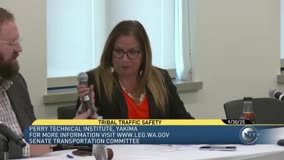
YAKIMA, Wash. — Yakama Nation leaders and engineers told the Washington State Senate Transportation Committee on Sept. 30 that they are expanding a data‑driven traffic‑safety program focused on the US‑97 corridor and other travel routes used by tribal members.
The Yakama Nation engineering program described sensor pilots, roundabout construction and coordinated grants designed to reduce crashes and pedestrian strikes on reservation roads and in the surrounding ceded territory.
The work matters because Yakima County has had some of the highest motor‑vehicle and pedestrian fatality rates in Washington, presenters said, and the nation and its partners are using new tools to identify hazards before crashes occur.
Vice Chairman Christopher Wallahi, vice chairman of the Yakama Nation, opened the presentation by stressing safety: “Safety comes first.” He described support for US‑97 corridor improvements and urged patience from community members while construction proceeds.
Grayson Squiox, the Yakama Nation engineering program manager, told the committee the program administers many projects under self‑determination contracts and grants and oversees roughly 1,200 miles of public roads on the reservation.…
Already have an account? Log in
Subscribe to keep reading
Unlock the rest of this article — and every article on Citizen Portal.
- Unlimited articles
- AI-powered breakdowns of topics, speakers, decisions, and budgets
- Instant alerts when your location has a new meeting
- Follow topics and more locations
- 1,000 AI Insights / month, plus AI Chat