Pennington County declares downtown bank building surplus; South Dakota School of Mines expresses interest
Loading...
Summary
The Pennington County Board of Commissioners voted to declare the county-owned former First Interstate Bank at 14 Saint Joseph Street surplus and to file an independent appraisal, after presentations about potential sale terms and interest from the South Dakota School of Mines.
The Pennington County Board of Commissioners on Sept. 29 declared the county-owned building at 14 Saint Joseph Street — the former First Interstate Bank — surplus and adopted an independent appraisal to be filed with the county auditor, clearing the way to begin negotiations on a possible sale.
Why it matters: The county bought the building in February 2023 and has since spent nearly $1 million on improvements; commissioners said selling the property could reduce the county's operational footprint and remove annual operating costs, while the South Dakota School of Mines described potential community benefits if it or a partner acquires the building.
The board's action: Commissioners voted to declare the property surplus and adopt the independent appraisal by Simpson & Associates dated 08/20/2025; the motion carried. The motion was stated on the record under SDCL 6-13-1 and SDCL 6-13-2 and the appraisal will be filed with the Pennington County auditor as part of the surplus process.
What county staff said: Davis Purcell, director of Buildings and Grounds for Pennington County, told the commission the county purchased the building in February 2023 "for about $4.4 million" and has invested "roughly $960,000 in improvements," bringing total county investment to "about $5.4 million," while the independent appraisal set market value at "about $5.1 million." Purcell said the board must declare the property surplus before staff can begin negotiating sale terms.
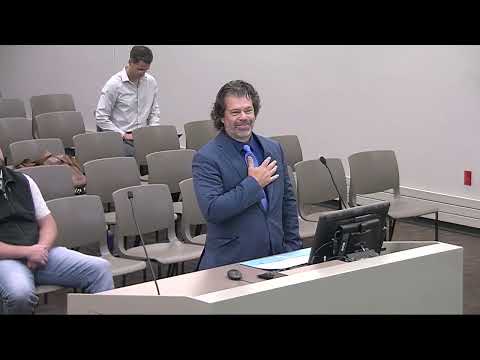
School of Mines interest and constraints: Brian Tandy, president of the South Dakota School of Mines and Technology, told the commission he supports the Innovation District vision and that the university sees potential for the building to house firms that partner with faculty and students. "We're very interested in that vision because it will bring companies to town that will work with our faculty and staff, hire our students, and create more opportunities for our students to stay here after graduation," Tandy said. He added that, as a state entity, a direct campus acquisition would require approval by the state legislature and that the school is exploring partnership structures and a donor who has expressed interest in funding a purchase.
Debate and concerns: Some commissioners and department leaders urged caution about timing and operational impacts. Eric Witscher, public defender, asked the board to delay selling or otherwise acting quickly, saying moving county departments is costly and disruptive: "To move us back into this building is gonna cost $3,000,000," he said, noting the public defender's office had recently moved and invested in furniture and buildout. Commissioners who supported starting the surplus process said declaring surplus and filing the appraisal does not itself sell the building, but enables public negotiation and transparency.
Next steps: With the surplus declaration and the appraisal filed, county staff may begin public negotiations with interested buyers. Commissioners said they will consider sale terms, exposure to open market offers, and any legislative requirements if a state entity is involved. The county retained a vacant lot acquired with the purchase and clarified the parking lot is not included in the surplus action.
Ending note: The commission's action is administrative — it declares the property surplus and records the appraisal. Any actual sale would require subsequent approval and, if a sale involves the school as a state entity, potential legislative approval as described by Tandy.