
Historical society reports new discoveries, carbon dating and recovered artifacts
Get AI-powered insights, summaries, and transcripts
Subscribe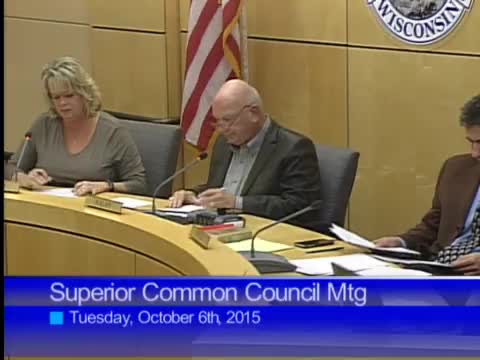
Summary
The Douglas County Historical Society reviewed exhibits and recent discoveries at the Oct. 6 council meeting, including a dugout canoe sent for carbon dating, a recovered wartime emblem and ongoing work to catalog the society’s collections.
Tony Tracy, director of the Douglas County Historical Society, briefed the council on Oct. 6 about a string of recent finds and programming updates at the society’s museum at 11th and John streets.
Tracy said the museum recently hosted a Wisconsin Historical Society traveling exhibit and that a state archaeologist has identified the society’s dugout canoe as an unusually intact specimen; the society has sent a sample for carbon dating to determine its age. A 1940s scrapbook in the society’s holdings also revealed records of previously donated objects, which led staff and the Superior Police Department to recover an emblem — an eagle element reportedly taken from a larger artifact — that had been offered for sale online.
Why it matters: The canoe may be among a small number of surviving North American dugout canoes; carbon dating and conservation could establish the artifact’s age and significance. The recovery of a historically important emblem from a suspected stolen-goods seller underscores gaps in earlier cataloging and the value of ongoing inventory work.
Highlights from the presentation - The society is cataloging boxes of uncatalogued materials; a scrapbook from Waconia helped the staff identify donor records and locate items that had gone missing from the collection. - The dugout canoe was identified by the state archaeologist as a rare, authentic example; staff have submitted a sample for carbon dating and await results. - A wartime emblem described as an eagle clutching an insignia — reportedly brought back by a World War II veteran and previously cataloged in the 1940s — turned up for sale online and was recovered with assistance from Superior police. - The society continues programs including “History Saturdays,” vintage movie nights, a recent “living history” cemetery walk and a planned publication project around the photographs of David Berry, an area photojournalist whose prints are in the collection.
Tracy thanked the city for ongoing support and said the society plans to continue exhibitions and community programming.
Ending: The council received the report; no actions or votes were required. The society will return to the council or the committee as needed with formal requests for support or preservation projects.