
Council rejects SuperOne application for Class B liquor license after residents cite verbal agreement
Get AI-powered insights, summaries, and transcripts
Subscribe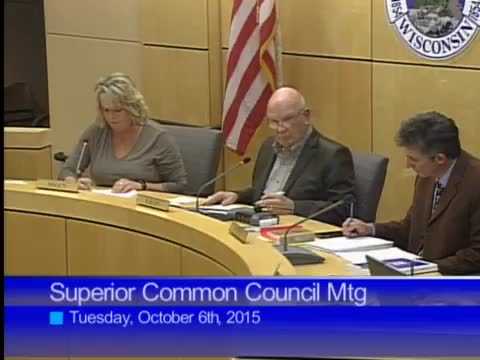
Summary
The Superior Common Council voted on Oct. 6 to deny SuperOne’s application for a Class B liquor and beer license for its East End store after residents and business owners said they were told previously the store would not contain a liquor operation.
The Superior Common Council on Oct. 6 voted against granting SuperOne a Class B liquor and beer license for its East End store, rejecting the application by a 5–2 margin after extensive public comment and council debate.
The vote followed more than an hour of public comment, including neighbors and business owners who said they were told by SuperOne representatives and brokers at the time of a land trade that the planned store would not include a liquor outlet. Steve Ledeen, a resident who said he represented neighbors, told the council, “I ask that the council vote no.” Walter Hagen, the owner of Pucces Bar in the East End, told councilors that he had relied on that representation when trading property and that “a person's word is worth everything.”
Why it matters: Councilors framed the decision around two issues — how to treat alleged verbal promises made during the store’s development, and whether the city’s ordinance that ties some off-sale liquor licenses to an on-site bar is being applied consistently. Several councilors said the ordinance was originally adopted to limit large retailers such as Walmart from capturing off-sale liquor sales; others said the history of verbal promises and the specifics of earlier discussions warranted more time to investigate.
Discussion and public comment Members of the public and local business owners took turns at the podium. Steve Ledeen asked the council to deny the license, saying the city had previously discussed and effectively decided the issue. Walter Hagen said he and his wife had traded land to SuperOne in reliance on representations that no liquor store or bar would be part of the project. Several speakers produced a recorded voicemail from a broker, Brian Force, who said he did not recall promising that a liquor store would not be allowed there.
Representatives for SuperOne addressed council questions. Bruce Anderson, speaking for the company, said the latest application reduced seating in the proposed on-site bar by about one-third from the earlier submission (he said the initial plan had about 49 seats). Anderson said SuperOne invested “somewhere north of $12,000,000” in the project and described the change as part of an evolving business plan.
Council debate Councilors split on process and precedent. Councilor Garfield asked for a two-week delay to talk further with constituents and to investigate the history of the alleged verbal agreements; he said he had received many constituent inquiries and was not prepared to vote yes. Councilor Finsland and others argued the council should apply the city’s ordinance consistently and not create a nonstandard process for one applicant; Finsland said the ordinance was crafted at the request of local liquor store owners to prevent big-box retailers from capturing off-sale liquor business.
A procedural motion to table the license was made and considered earlier in the meeting; after debate the council voted on the substantive motion to approve the license.
Formal action The council took a roll-call vote on the motion to approve the license. The recorded roll call showed votes as follows: Councilor Fennessy — yes; Councilor Sweeney — yes; Councilor McDonald — abstain; Councilor Garfield — no; Councilor Finsland — yes; Councilor Harris — abstain; Councilor Dennis Dalbec — yes; Councilor Esther Dalbec — yes; Councilor Olsen — no. The chair announced the result as a 5–2 vote in favor of denial; several members’ abstentions meant the motion to approve did not reach the majority needed.
What the council did not do The council did not adopt any ordinance change during the meeting. Councilor Garfield voiced support for tabling the item to allow staff or a committee to review the ordinance that requires an on‑site bar with some off‑sale licenses; other members said revising that ordinance was a separate policy question that should not be used to delay a routine licensing decision.
Next steps and context No further formal direction to staff was recorded. Several councilors said they would pursue more information from the parties involved; one speaker urged the council to treat SuperOne the same as any other applicant if it meets established requirements. Because the council’s recorded reason for denial will be part of the public record, any challenge in court would require the council’s rationale to be non-arbitrary, as several councilors noted during debate.
Ending: The license application was left off the city’s active license roll following the vote; SuperOne may reapply or seek further action outside the council but the council took no additional formal direction during the meeting.