
Superior council delays vote on 2016 general fund budget after finance director warns of multi‑year shortfalls
Get AI-powered insights, summaries, and transcripts
Subscribe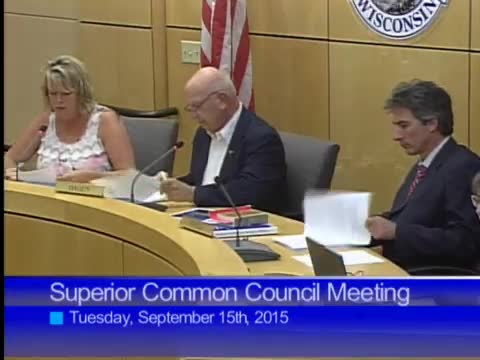
Summary
The Superior Common Council postponed adoption of the city's 2016 general fund budget to Oct. 6 after Finance Director Vito presented projections showing growing deficits through 2020 and detailed revenue and contingency assumptions.
The Superior Common Council on Tuesday, Sept. 15 postponed action on the city's 2016 general fund budget after Finance Director Vito told the council the five-year projections show mounting shortfalls that will require action beyond the current budget. "If you don't feel comfortable passing it tonight, that's okay. We can bring it back on October 6," Vito said during the presentation.
Vito said the largest single change in the 2016 budget is that the municipality will no longer receive a $500,000 landfill subsidy, and that the budget includes a contingency of $395,000. He presented multi‑year projections showing a $187,000 deficit in 2017, "over $800,000" in 2018, about $1.4 million in 2019 and more than $2.2 million by 2020 if current revenues and service levels hold.
The projections, Vito said, assume the city's two largest revenue sources'property tax levy and state shared revenue'remain essentially flat. He noted shared revenue has been frozen since 2012 and that the levy can only increase in limited circumstances set by state law. "When we look at projections going forward for the general fund and we see that these 2 revenue sources are likely going to remain flat, that's where we start running into deficits in future years," Vito said.
Police and public safety expenditures were a focus of the discussion. Chief Alexander said the department handles about 25,000 calls a year and nearly 3,000 arrests (adult and juvenile), and that Superior's crime index and calls for service are higher than many comparably sized Wisconsin cities, contributing to higher police spending per capita. Vito and others noted the SAFER grant renewal will maintain staffing at 37 firefighters and does not affect the general fund.
Councilors questioned contingency size and long‑term planning. Councilor Sweeney moved to delay adoption until Oct. 6 so members could review the packet further; Councilor Olsen seconded the motion. The motion carried on a voice vote.
The council was reminded that statutory deadlines require the levy and tax roll to be finalized in late fall; Vito said the budget could be returned to the council Oct. 6 for final action. Several councilors urged longer‑term planning now to address the projected 2018 and later deficits rather than rely solely on reserves or contingency.
Next steps: the city will place the budget back on the Oct. 6 agenda with any proposed changes or amendments, and staff said they will field council questions in advance so changes can be posted on the agenda in time for public notice.