
Olentangy board pitches $235 million no-new-millage bond as treasurer warns of multi‑year operating deficits
Get AI-powered insights, summaries, and transcripts
Subscribe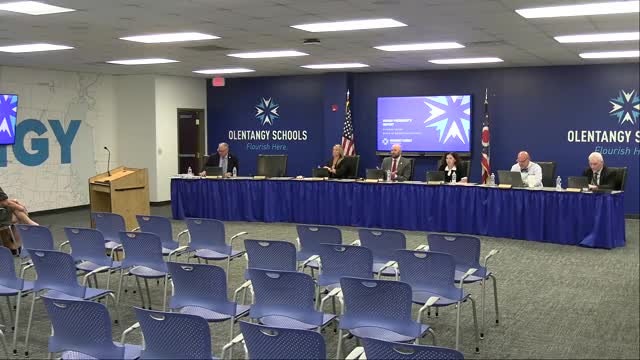
Summary
The Olentangy Board of Education on Sept. 25 recommended a $235 million, no-new-millage bond to build a new high school and elementary school while the district’s treasurer presented a financial forecast showing multi‑year deficits and a likely need for operating revenue by 2027–28 if state funding and local conditions do not change.
The Olentangy Local School District asked voters to consider a $235 million bond on Nov. 4 to finance a new high school, a new elementary school and associated construction projects while maintaining the district’s current voted tax rate, district officials said at the Sept. 25 board meeting.
District leaders framed the proposal as a “no new millage” bond — meaning the levy rate for debt service would remain at its current level rather than adding new voted mills — and argued that approach is the least expensive way to pay for the facilities while still accommodating rapid enrollment growth.
The treasurer presented the district’s financial forecast and said the general fund will run a deficit this fiscal year. The forecast projects a $24.5 million shortfall for fiscal 2025–26, $42.9 million the following year and roughly $71.9 million by the third year of the forecast if no changes occur. The treasurer said the district’s cash-on-hand would fall from a comfortable level to an estimated 14 days by 2027–28 under the base projection, and said that timeline makes seeking additional operating revenue likely in that period unless state funding changes materially.
Why it matters: Olentangy is adding roughly 500 students a year, district leaders said, and officials said they must increase physical capacity and staff to preserve class sizes and services. The board and superintendent described tradeoffs among options: delay construction and rely on temporary spaces (which costs operating dollars and offers no long-term capacity), seek additional voted mills now (which raises short‑term tax bills), or use a no-new-millage bond that spreads costs over a longer period while keeping the district’s current bond rate steady.
Treasurer’s forecast: The treasurer explained details that drive the projection, including that roughly 69% of district revenue comes from local property taxes, state contributions have been constrained by the current funding formula and wage and benefit growth are the largest and most predictable expense drivers. The forecast assumes modest annual revenue growth but higher expense growth driven by salaries, benefits and staffing to serve a growing student population. The treasurer noted a prior one‑time $50 million transfer related to a budget clawback that temporarily altered last year’s figures.
Board discussion and context: Board members pressed for clarity on the bond’s effect on taxpayers if property values rise. Officials said that when valuation increases, effective tax rates fall; because the bond would keep the voted debt service mills at current levels, homeowners generally would pay less than they would have if the board added new mills. The presenters emphasized that whether an individual homeowner’s bill rises or falls after a reappraisal depends on how that home’s value changes relative to the district average — a home that appreciates less than the average can see a lower bill even if assessed value rises.
The board also discussed the timing of when operating funds might be needed. Both the treasurer and superintendent said that, under current projections, the district is likely to need additional operating revenue around the 2027–28 school year to maintain services without cutting programs. They added that increased state funding or different cost-set inputs in future state budgets could delay or reduce that need.
Other items: The treasurer said the district will request board approval to purchase 12 replacement buses (nine 71‑passenger and three small buses) at about $1.7 million as part of the capital replacement cycle. The board approved the financial forecast and other consent items on unanimous voice/roll-call votes at the meeting.
What the board voted: The board adopted the forecast and approved consent items including routine personnel actions, donations and the permanent appropriations for FY 2026.
District comments and next steps: Superintendent and board members stressed the district’s record of fiscal restraint and pointed to recent steps to lower the effective tax rate over time while funding growth. The district will continue outreach about the bond and said the Nov. 4 ballot language is a no-new-millage bond for $235 million. The treasurer recommended continued monitoring of state budget developments and district enrollment; the board will revisit operating revenue decisions as the forecast evolves and as enrollment and state funding data are updated.