Trinity County planning panel urges board to revise code to improve blight enforcement
September 26, 2025 | Trinity County, California
This article was created by AI summarizing key points discussed. AI makes mistakes, so for full details and context, please refer to the video of the full meeting. Please report any errors so we can fix them. Report an error »
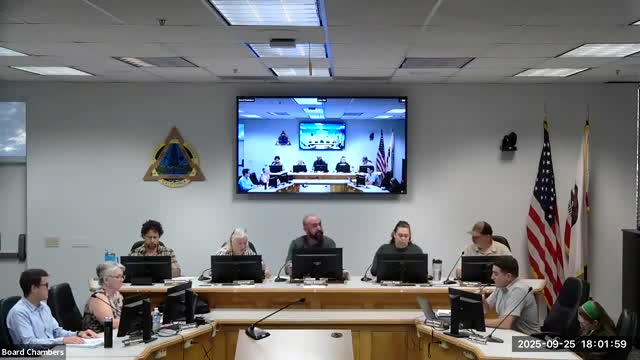
Interim planning director Drew Blavani told commissioners that staff had reviewed neighboring jurisdictions’ approaches and concluded the county lacks “an adequate cost recovery mechanism.” He said updating Title 1 and Title 8 and consolidating related code sections would allow staff to better enforce zoning and health-and-safety violations and recover some costs through a “violation removal fee.”
Why it matters: Commissioners and public commenters framed the change as an effort to give county staff practical tools to address abandoned buildings, trash, overgrown vegetation and other conditions neighbors say create hazards or health risks. Commissioners also flagged limits on fee recovery: county-placed liens typically are collected only at sale or escrow, so abatement costs can be difficult to recoup quickly.
Public comment supported a consolidated approach. Ben Kellogg of Weaverville said the county should make a single, accessible code section: “Combining all of the, blight, so to speak, ordinances into 1 general area would make everyone's lives better,” he told the commission.
Commissioners debated scope. Several members said the commission should focus on health-and-safety nuisances (rodent infestations, sewage, burned structures) rather than aesthetic or lifestyle issues such as uncovered boats or equipment, which many residents accept in rural areas. Commissioners emphasized that some enforcement mechanisms—like adding abatement fees to property tax bills under a vegetation ordinance—already exist for limited cases, while other remedies rely on liens that are difficult to collect immediately.
Staff named existing tools and limits: environmental health currently charges a violation removal fee in some cases; other divisions do not. Staff also noted CalRecycle’s junk-car program as a possible grant source but said they were not aware of broader state funding specifically for blight abatement.
The commission approved a motion recommending that the Board of Supervisors consider revising Title 1 to address funding and cost-recovery mechanisms and add narrowly defined dangerous-nuisance language to Title 8 (health and safety), while accounting for planning staff workload. The commission recorded a 5-0 vote in favor and directed the recommendation to the Board of Supervisors.
Next steps: The recommendation now goes to the Board of Supervisors for consideration; staff said any detailed changes would be developed in follow-up work and could be incorporated as the county updates fees and the zoning code.
View the Full Meeting & All Its Details
This article offers just a summary. Unlock complete video, transcripts, and insights as a Founder Member.
30-day money-back guarantee
Sponsors
Proudly supported by sponsors who keep California articles free in 2026

