Proposed H‑1B fee hike raises concerns about immersion program staffing and retention
Summary
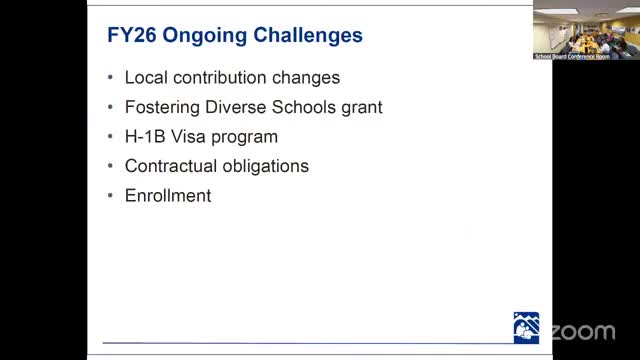
At the Sept. 25 finance committee meeting, district staff and a Senate office representative said a reported federal proposal to impose a large fee on H‑1B visas could increase costs for the district and worsen retention in language immersion programs that rely on visa holders.
At the Sept. 25 municipal board finance committee meeting, Mr. Ratliff, the district’s chief financial officer, raised a potential federal policy change that could affect teacher recruitment and retention. Ratliff said recent press reports indicated the federal administration proposed a $100,000 charge per H‑1B visa and cautioned the district does not yet have final details. “We only have a handful, but it's still, you know, if we have 7 of them, it's still a lot of money,” he said, noting that most of the district’s visa‑supported teachers are in the J‑1 category but that a subset on H‑1B visas have different long‑term retention pathways. Ratliff told the committee that H‑1B teacher candidates generally have a path to longer‑term employment and potential immigration stability, while J‑1 participants are by design more temporary; he said that dynamic makes immersion and other specialty programs more vulnerable to retention losses if H‑1B costs rise or access is restricted. Marty, a representative from Senator Sullivan’s office who participated in the meeting, said the senator’s staff had reached out and that the office was working to educate its policy team. “Our request was that they were going to weigh in on this,” Marty said, describing a district ask for a carve‑out or exemption for public school districts because most press attention on H‑1B changes has focused on the technology sector. He said the senator’s office would forward district information to policy staff and stand ready to assist with advocacy. Committee members discussed whether to pursue federal advocacy. Staff said they would notify board leadership as new information becomes available and coordinate with the congressional delegation and other stakeholders as needed.