Get Full Government Meeting Transcripts, Videos, & Alerts Forever!
Get email alerts on the Water And Sewer Rates topic
No spam. Unsubscribe anytime.
Stevensville meeting spotlights rising water and sewer costs, aging infrastructure and repair plans
Summary
Rate consultants and public officials described higher power and chemical costs, aging pipes and planned capital work as reasons for recent water and sewer rate increases and ongoing repair needs. Residents pressed councilors for relief and for clarity on projects, timing and costs.
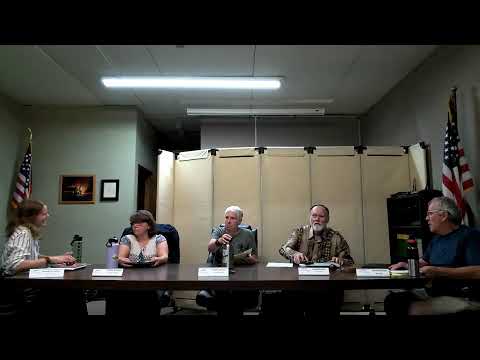
Stevensville officials, a rate consultant and residents spent the majority of a town council meeting discussing the town’s water and sewer finances, recent rate increases and the town’s aging infrastructure. Bobby Shore of Montana Road Water System summarized a rate analysis and said rising power and chemical costs and existing loans require rates that produce enough revenue to operate and maintain the systems. The issue matters because council members and residents said customers are struggling to pay bills, some yards showed drought damage, and the town faces expensive capital work including leaks, a failing reservoir and planning for a new storage tank. Shore described the rate-analysis approach used for municipal utilities—inventorying operations and maintenance costs, debt service and reserves—and cited the Montana Code Annotated as the statutory guidance requiring rates that are fair, equitable and sufficient to cover system costs. He told the council the analysis showed recent cost increases concentrated in three categories (salaries, utilities and chemicals) and reported a two‑year increase of roughly $34,000 for sewer and $36,509 for water in those categories. Shore and town staff discussed specific system problems: active leak detection work, localized pressure problems after recent paving on Spring Street, and a reservoir with possible piping issues beneath the concrete. Options mentioned included repairing the reservoir piping or replacing the tank; both were described as costly. Shore estimated a new storage tank could cost between $3 million and $4 million and said the town is pursuing grant funding to help cover a project and anticipated a local match. Residents asked how the bills are calculated, whether sewer charges vary seasonally and how the town plans to use funds collected in a new capital assets account. Shore and staff said sewer billing is tied to water‑line size rather than summer usage and that the town intends to use rate revenue for both current repairs and to build a capital fund for future replacements. Several residents asked whether rates can be lowered. Shore and councilors said lowering rates would require matching reductions in expenses or different funding sources; federal and state loan documents and program rules generally require systems to set rates that support debt service and reserves. Shore noted potential state programs under discussion that might finance solar installations to reduce power costs but said those programs were not yet available. He also noted increased chlorine production costs following regulatory changes as a driver of higher chemical costs. Public commenters raised additional concerns: reports of a black, oily substance in water (discussed as consistent with manganese and potentially treatable with polyphosphate), a water‑rights expense the town has paid (about $124,000, according to the meeting), and a contested development (Burn Fork Estates) whose progress is tied to water rights. Council members and staff said a recent leak‑detection survey identified leaks including at Spring Street and Creekside; not all repairs have been scheduled because the locations and costs are not yet fully known. Councilors said some larger repairs were previously funded with federal grants (Mission Street work cited as roughly $1.8 million with a local match of about $784,000). One councilor noted the town has not had a rate increase since Nov. 1, 2019, when water and sewer rates were $31.14 and $51.90 respectively (figures cited from staff and the packet). Speakers urged ongoing transparency and public education; some residents warned of political consequences and called for more community engagement. Town staff and councilors said they will continue leak detection, seek grant funding for larger capital items such as a storage tank and study impact fees and hookup charges for new development. The meeting also included questions about the town’s bond payoff schedule (speakers said the nearest loan payoff is around 2040 and others extend into the 2050s), the possibility of raising impact or hookup fees (which would require an impact‑fee study and related procedures), and the limits of what rate revenue may be used for under loan and grant agreements. The council did not take a formal new policy vote on rates during the portion of the transcript provided; the meeting record shows extensive discussion, public comment and staff direction to continue planning and grant work. The town packet and staff reports were cited repeatedly during the discussion; residents were advised to use those documents for line‑by‑line details not read into the minutes.