Get Full Government Meeting Transcripts, Videos, & Alerts Forever!
Get email alerts on the Land Use And Setbacks topic
No spam. Unsubscribe anytime.
Variance request for garage encroachment denied after neighbor letter and staff review
Summary
A request to reduce a side-yard setback for a newly built garage — cutting the required 7.5-foot side yard to about 6.9 feet for one corner — was denied by the zoning board after staff advised the variance did not meet the LDC standards. The applicant had presented a neighbor’s letter offering a shared plant easement and mitigation.
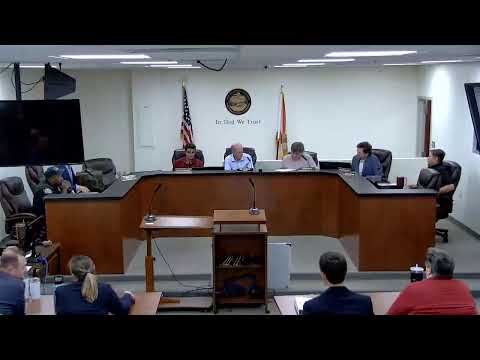
The Walton County Zoning Board of Adjustment on Sept. 25 denied a variance request from Kyle Besch that would have reduced the required side-yard setback on a residential lot so a newly framed garage could remain in place. Besch had asked to reduce the side-yard requirement from 7.5 feet to approximately 6.9 feet at the northeast corner after an error during framing left a small encroachment.
Why it matters: Variances are discretionary and require the board to find the applicant has met the code’s strict criteria for an exception. The board’s denial underscores the county’s cautious approach to setbacks in residential preservation zoning districts and the need for applicants to document a qualifying hardship or other statutory grounds for relief.
Applicant’s testimony and neighbor support: Besch told the board he notified his immediate neighbor upon discovering the error, provided a copy of his survey and said the neighbor — David Bell — furnished a written letter consenting to an ecological enhancement easement and agreeing to share the cost of planting a narrow native-plant easement along the property line. Besch said the encroachment resulted from framing set before a final survey stake was placed and that removal would be a hardship because of the integrated construction.
Staff recommendation and legal standard: County staff advised against the variance, saying the request did not satisfy the minimum requirements of the land development code for a variance in a residential preservation zoning district and recommending denial. The staff report and the board’s discussion noted that the property is in a residential preservation zoning category and the code’s variance standard was not met based on the record presented.
Board action and outcome: After public comment and the applicant’s testimony, a motion to grant the variance was made and the board voted; the official record states the board denied the request. The board attached the applicant’s survey as the exhibit showing the area of encroachment and indicated the applicant may provide additional documentation and pursue other remedies.
Ending: The applicant was told the board’s written order will follow and that, if desired, he may reapply or seek to address the encroachment by removing the offending portion. The board did not adopt the proposed ecological easement as a condition in the denial.