Get Full Government Meeting Transcripts, Videos, & Alerts Forever!
Get email alerts on the Land Use Signs topic
No spam. Unsubscribe anytime.
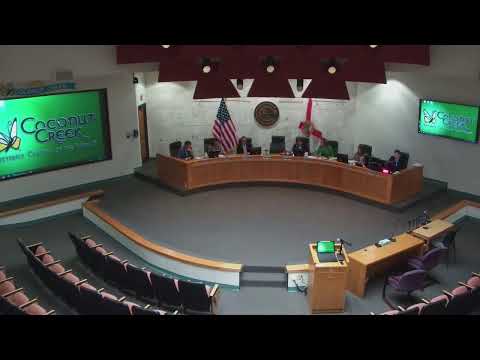
Commission approves sign variances for Lincoln of Coconut Creek; commissioners urge streamlined review for small businesses
Summary
The commission granted sign deviations allowing a 10.8-square-foot illuminated service sign (8 allowed) and a 5-foot-1 logo sign (3-foot limit) for the new Lincoln of Coconut Creek auto dealership. Commissioners discussed whether some sign approvals could be handled administratively to reduce cost and time for businesses.
The Coconut Creek City Commission on Sept. 25 approved two quasi‑judicial sign deviations for the Lincoln of Coconut Creek auto dealership, permitting a 10.8-square-foot illuminated service entrance sign where the code allows 8 square feet and a 5-foot-1 logo sign where the code permits a 3-foot maximum.
Why it matters: The deviations were tied to site-specific constraints — the service sign and logo are recessed under a portico and set back roughly 300 feet from Sample Road, with landscaping and vehicle displays limiting visibility. The applicant said larger or illuminated signs are necessary for on-site wayfinding.
Staff presentation: Justin Prophet, director of sustainable development, told the commission the property is in the Main Street district and in a PMDD zoning district, and staff concurred with the applicant’s responses to the deviation criteria, recommending approval.
Applicant testimony: Mark Branchley, representing the applicant, outlined that the service sign is largely in shadow under a portico and would be 27 feet back from the building frontline; the logo sign will be mounted on an oversized column 17 feet from the front. He said the larger size and illumination are intended to improve customer wayfinding given the landscaping and median setbacks.
Commission discussion: Commissioners praised the staff review and approved the deviations but several expressed concern about the administrative burden the relief process places on businesses. Commissioner Riedell said the public hearings and planning‑and‑zoning steps can be costly and suggested staff evaluate whether certain modest sign deviations could be handled administratively to reduce burdens on smaller businesses. Commissioner Brody said any change should preserve the city’s visual standards but supported a streamlined process for straightforward cases.
Outcome: Both deviations were approved in roll-call votes. For the service entrance sign (Resolution 2025-109) the motion to approve was moved by Commissioner Riedell and seconded by Commissioner Welch; for the logo sign (Resolution 2025-110) the motion was moved by Commissioner Bridal and seconded by Commissioner Brody. Recorded votes were unanimous among commissioners present.
What’s next: Staff was asked to consider whether code adjustments or administrative processes could streamline similar sign requests in the future without eroding the city’s design standards.