Get Full Government Meeting Transcripts, Videos, & Alerts Forever!
Get email alerts on the Cdbg Report topic
No spam. Unsubscribe anytime.
Council accepts HUD-required CDBG annual performance report showing major spending on infrastructure
Summary
City staff presented and the council accepted the U.S. Department of Housing and Urban Development Consolidated Annual Performance and Evaluation Report, which shows more than three-quarters of the city’s CDBG funding went to public facility and infrastructure projects, including Soldier Creek improvements and neighborhood hydrant installation.
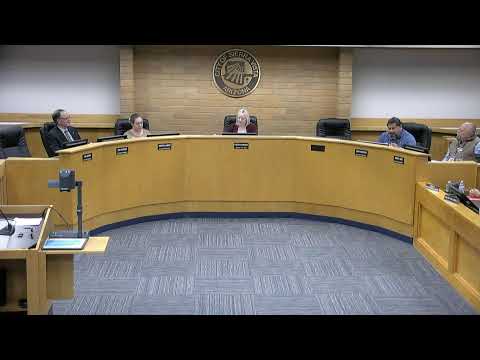
The Sierra Vista City Council accepted the city’s Consolidated Annual Performance and Evaluation Report (CAPER) for the Community Development Block Grant (CDBG) program Sept. 25, a report staff prepares and submits annually to the U.S. Department of Housing and Urban Development.
Mr. McLaughlin, a city staff member who presented the report, told the council that “more than 3 quarters of our CDBG funding supported public facility and infrastructure improvements.” He listed completed projects including the Soldier Creek Improvement Project and the installation of fire hydrants in the Manobello neighborhood. Staff said the Soldier Creek project involved spreading rock in the park’s upper portion and installing a multi-use path.
The report showed $132,000-plus in expenditures on the hydrant project by the end of June and that $39,597 in CDBG public service funds were distributed to outside nonprofit organizations under subrecipient agreements; staff said those contracts have been closed out. Administrative costs remained just under 3 percent, consistent with prior years. The CAPER also includes HUD-required beneficiary data.
Michelle Landis, the city’s grants administrator, was acknowledged by the presenter for assembling the report.
Councilmember Mark Rodriguez moved approval; the motion was seconded and approved by voice vote.
Why it matters: The CAPER documents how federally allocated CDBG funds were used locally and is required by HUD to remain eligible for future entitlement and formula funding. The emphasis on public facilities and infrastructure indicates the city prioritized capital improvements in the reported program year.
What the report does not show: Staff did not present a specific multi-year funding plan or list future CDBG projects in this presentation. The CAPER was described as a retrospective report covering the prior program year’s expenditures and beneficiary data.