Get Full Government Meeting Transcripts, Videos, & Alerts Forever!
Get email alerts on the Economic Development topic
No spam. Unsubscribe anytime.
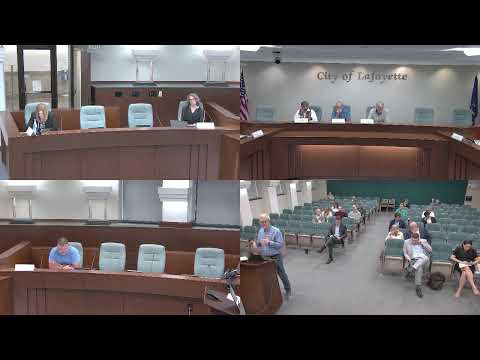
Redevelopment commission approves tax abatements for BioGlycols/Sustaina $430 million plant
Summary
The Lafayette Redevelopment Commission voted to recommend establishing an Economic Revitalization Area and approved 10-year real estate and personal property abatements for BioGlycols, LLC (company representatives referred to the project as Sustaina), which proposes a $430 million plant co-located with PREMET.
The Lafayette Redevelopment Commission on Sept. 25 approved two companion resolutions recommending tax abatements for a proposed $430 million manufacturing facility to be sited near the PREMET plant in Lafayette. The commission authorized a 10-year real estate abatement and a 10-year personal-property abatement for the company named in the documents as BioGlycols, LLC; company representatives referred to the project as Sustaina.
Commission Redevelopment Director Dennis Carson presented the two resolutions, identified in the meeting record as LRC 2025-12 (economic revitalization area and real-estate abatement recommendation) and LRC 2025-13 (personal-property abatement recommendation). He said the company plans to invest about $430,000,000 in a single facility and is seeking 10-year abatements on both real estate and machinery/equipment. "This resolution establishes what we call an economic revitalization area, an ERA, for the purposes of tax abatement," Carson said.
Representatives from the company described the project as a plant that will use dextrose from corn to produce a high–value chemical feedstock for polyester and PET bottles, displacing a feedstock currently made from fossil fuels. A company representative who identified himself as Gustavo said the company expects to break ground by the end of next year and begin plant startup in 2028. Gustavo said the project will be co-located with PREMET, with a pipeline connecting the two facilities.
Company officials provided staffing and wage estimates during the presentation. Gustavo said the operation’s first phase should reach about 95 jobs, growing to roughly 191 jobs over time, with higher employment during construction (he estimated about 300 indirect construction positions). He said the typical annual wage for plant operations would be about $96,000 (about $46 per hour) and that the company expects to recruit engineers and other skilled staff. The company also said some executives and technical staff currently based in Brazil would relocate to the area once the project proceeds.
Mayor (name not specified) spoke in support of the project, highlighting the size of the capital investment, wages, construction employment and the environmental aspect of producing a plant-based feedstock rather than one derived from fossil fuels. "We're creating good jobs, good investment with a great company," the mayor said, urging the commission’s affirmative vote.
Jackie (city staff, name not specified) clarified that the first resolution approved established the economic revitalization area and recommended the real estate abatement, and that the second resolution was the companion approval for the personal property abatement. Both resolutions were moved, seconded and approved by voice vote; no roll-call tallies were recorded in the meeting minutes.
Discussion-only items during the presentation included the company’s headquarters (the representatives said the company is currently based in Brazil and expects to move U.S. staff when the plant proceeds), the recruitment of several Brazilian staff to the local workforce, and a description of the company’s site as a parcel of about 30 acres northeast of the existing PREMET facility near U.S. 52 South. The commission did not place additional conditions in the motions and did not record follow-up directions beyond approving the resolutions.
The resolutions recorded in the meeting packet name BioGlycols, LLC as the abatement applicant; company speakers used the commercial name Sustaina during their remarks. The commission’s action was limited to the recommendations contained in the two resolutions; any future local incentives, permits or agreements were not decided at this meeting.
Approved actions: Resolution LRC 2025-12 (recommend establishment of ERA and recommend approval of real-estate abatement) and Resolution LRC 2025-13 (recommend approval of personal-property abatement). Both motions were approved by voice vote.
Why it matters: The project represents one of the largest private capital investments discussed at this commission meeting, promises higher-than-average local wages for operations staff, and ties into existing local industry via co-location with PREMET. The abatements will affect the taxable base for the specified properties for the duration of the approved 10-year abatement terms.