Get Full Government Meeting Transcripts, Videos, & Alerts Forever!
Get email alerts on the School Discipline topic
No spam. Unsubscribe anytime.
Manhasset leaders say new cell-phone rules have not produced predicted disruptions
Summary
After the district tightened cell‑phone rules for the school day, the superintendent and the student board member reported fewer disruptions than expected; both administrators and students said phones remain in use outside class periods but the policy is functioning as intended.
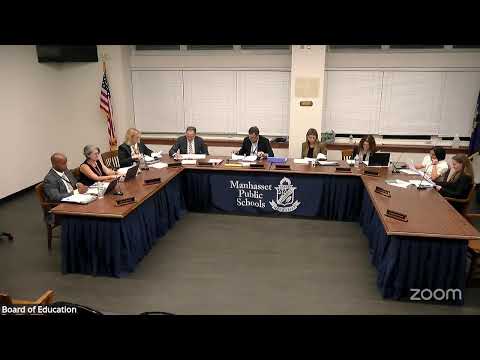
Manhasset school officials and the student board representative told the Board of Education on Tuesday that a new cell‑phone policy implemented this school year has not caused the disruption some administrators feared.
Dr. Pelletieri, the superintendent, told the board he had “underestimated … the abilities that our kids have when it comes to resiliency,” and said teachers, parents and students have generally adapted to the policy. He said he still sees older students using phones during lunch but that the devices have not become a major classroom issue.
Catherine Abrams, the student board representative, told trustees her perspective from inside the schools aligns with the superintendent’s observation. “It’s not as bad as one would think,” Abrams said, adding that many students are most frustrated about access to MacBooks and the district Wi‑Fi rather than the phone rules themselves. She said some students would prefer limited exceptions for lunch or free periods but understand the board’s preference that the policy be uniform.
Administrators said they will continue to monitor the policy and its effects. The superintendent noted he has observed classrooms and buildings and credited staff, families and students for working through implementation. No formal policy change or vote was taken at the meeting; both the superintendent and students described the current phase as implementation and monitoring rather than a finalized, long‑term revision.
Board members praised the reports and encouraged staff to request resources if the rollout requires additional support.