Get Full Government Meeting Transcripts, Videos, & Alerts Forever!
Get email alerts on the Building Fire Code topic
No spam. Unsubscribe anytime.
Committee adopts fire-department amendments to building-code bill; moves it to second reader
Summary
The Land Use and Transportation Committee adopted fire-department amendments to Council Bill 250,062, which adjusts building- and fire-code requirements for certain residential occupancies, and voted to report the amended bill to second reader.
The Land Use and Transportation Committee voted Thursday to adopt fire-department amendments to Council Bill 250,062, a measure changing building-code and corresponding fire-code requirements for certain residential occupancies, and to report the amended bill to second reader.
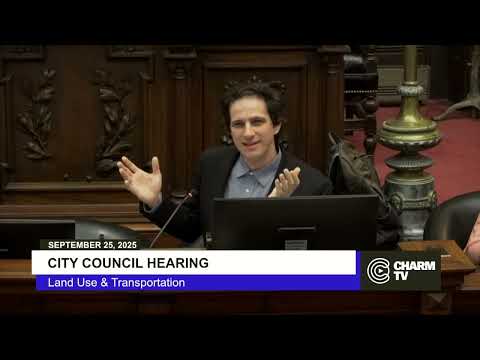
The amendments, introduced by the Fire Department and explained by Committee Chair Ryan Dorsey, add detailed fire-code language paralleling the building-code changes and raise protections for specified residential occupancies. Dorsey said, “We belatedly were informed that all of the changes that this bill makes in the building code have to also be identically transferred into the fire code,” and that Amendment 4 “is basically the whole bill with these things incorporated into it and put into the fire code.”
The package of changes includes: distinguishing Group R-2 (long-term residential) standards for building Type 3A rather than grouping 3A with Types 1, 2 and 4; raising sprinkler requirements in some cases to match forthcoming International Code Council guidance; increasing fire-protection ratings for certain assemblies from one hour to 1.5 hours where specified; and clarifying that corridors connecting unit entrances to stairways must meet a two-hour fire-rating where applicable. Committee members were given an eight-page consolidated amendment that Chair Dorsey said incorporated the other changes into the fire code.
Committee members asked no substantive technical questions during the brief presentation. The committee adopted the fire-department amendments and then moved the bill, as amended, favorable. The committee recorded the outcome as six affirmative votes and one absence and directed that the bill be reported to second reader on Monday.
The committee processed the amendments as a voting-session item; Dorsey said the bill had been before the committee on Sept. 18 and the amendments were distributed by email the week prior. No public testimony was offered during the voting session on this bill.
Next steps: the committee forwarded the amended bill to second reader; the transcript indicates the bill will be scheduled for the next Council calendar with a second-reading report.