Get Full Government Meeting Transcripts, Videos, & Alerts Forever!
Get email alerts on the Indiana Theater topic
No spam. Unsubscribe anytime.
Board outlines funding and RFP timeline for Indiana Theater: $300,000 shifted to theater capital, RFP work to begin
Summary
Board moved budget dollars toward Indiana Theater capital needs and directed staff to begin drafting an operations/management RFP to attract private managers once roof and major repairs proceed.
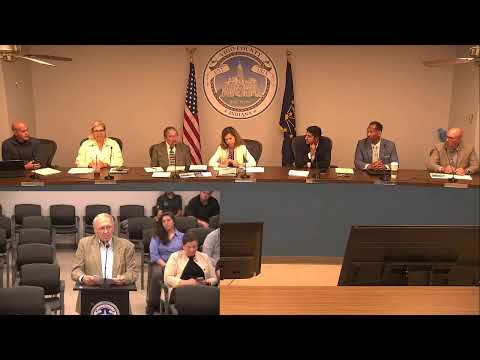
Board members discussed capital moves and next steps for the Indiana Theater on Sept. 24, including reallocating funds to address roof and capital work and beginning work on a request for proposals for private management.
A finance staff member reported that the board moved $300,000 from a general available-for-capital line into the theater capital expense line to reach $400,000 intended for the theater roof project, leaving roughly $57,183 in already-budgeted funds for immediate capital needs. "What I did is I moved 300,000 from that line to the theater capital expense line to create the 400,000 needed for the roof and at least getting that going," a finance staff member said.
The nut graf: board members agreed to start drafting an operations and management RFP so that potential private managers understand expected community and operational outcomes, and to provide historical utility costs in RFP materials to show the theater’s operating profile even while closed. The mayor said he wanted the RFP materials ready so an operator could be in place after construction.
Board members asked that RFP work begin immediately with consultant RJL and that legal services be used to structure lease/management expectations, though they did not set an issuance date; staff suggested issuing the RFP in late winter or spring after construction timelines are clearer. One board member recommended a site tour for board members before finalizing the RFP given the theater’s poor interior condition.
Supporting details: staff said they would include a year of historical utility bills in the RFP so proposers can estimate operating costs; the board also discussed potential transfers from underspent professional-services lines to cover remaining capital needs.
Less critical: board members noted the theater interior needs substantial work — exposed brick, fallen plaster and unsafe light fixtures — and emphasized realistic expectations for any manager responding to the RFP.