Get Full Government Meeting Transcripts, Videos, & Alerts Forever!
Get email alerts on the Regional Bike Ped Funding topic
No spam. Unsubscribe anytime.
NVTA outlines unique regional study to identify funding options for bike and pedestrian network—VDOT estimates up to $19 billion
Summary
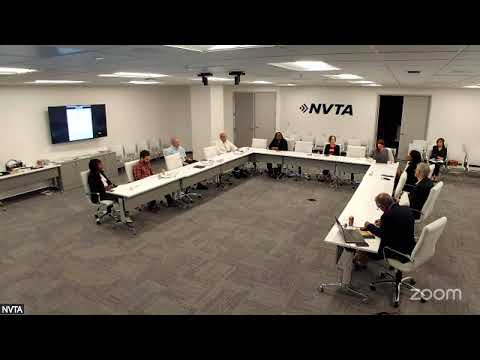
Starla Cuso, Northern Virginia Transportation Authority transportation planning and programming manager and project manager for the initiative, told PCAC on Sept. 24 that NVTA is preparing recommendations to identify revenue sources for bicycle and pedestrian infrastructure after a March request from the General Assembly.
Starla Cuso, Northern Virginia Transportation Authority transportation planning and programming manager and the project manager for the initiative, told the committee the work responds to a March 2025 request from chairs of the House and Senate transportation committees to review VDOT's 2024 study and recommend funding options. "In March 2025, NVTA received a formal request from the Transportation House and Senate Committee chairs," Cuso said. She summarized an approach that combined a review of existing funding sources, a scan of potential future revenue strategies, national case studies, and broad stakeholder coordination.
The VDOT study served as the inventory: staff said VDOT identified roughly 4,000 miles of bicycle and pedestrian infrastructure with an estimated capital cost of about $9 billion in 2022 dollars; NVTA staff presented an inflation‑adjusted estimate of about $19 billion in 2034 dollars. Cuso stressed the initiative's scope: it does not identify new projects or prioritize VDOT's list, nor is it a feasibility or deep financial‑modeling study. Rather, staff are preparing a matrix of existing funding sources and will recommend a narrowed set of 10–15 funding strategies to advance into further analysis.
Key takeaways from stakeholder outreach: NVTA convened more than 60 participants from jurisdictions, advocacy groups and agencies and held two coordination meetings. Attendees told staff that maintenance funding is especially challenging and that many local jurisdictions rely on a combination of local funds, VDOT revenue‑sharing, Transportation Alternatives Program grants, and regional NVTA funds. Stakeholders ranked revenue magnitude and a clear pathway to implementation as the most important metrics when evaluating candidate funding strategies.
Timeline and next steps: staff began work in June, held summer coordination meetings, and are drafting recommendations now. NVTA plans to present its recommended list of 10–15 candidate strategies to PCAC in October, then to the authority in November, and will submit the deliverable to the General Assembly later in November. Cuso said the initiative is meant to be iterative and that no single funding source is expected to cover the entire estimated need.
Discussion vs. action: the Sept. 24 presentation was informational only; PCAC members asked whether staff would match funding sources to appropriate capital or maintenance uses. Cuso said the initial work includes a table that notes whether an existing funding source is applicable to capital or maintenance; she said further matching and financial analysis would be part of later stages of the initiative. Committee members also asked whether educational and safety programs fit the scope; staff said the current effort focuses on capital and maintenance but noted some existing federal and state programs can fund educational components tied to project delivery.
Why it matters: committee members and staff said a dedicated and coordinated regional approach could help jurisdictions that lack capacity to assemble grants and sustain the built infrastructure. NVTA staff said they found few direct national precedents for a regionwide, dedicated bike/ped funding program and described the initiative as a unique opportunity to consider both existing revenue sources and new strategies that could be pursued through the General Assembly or regional partnerships.