Get Full Government Meeting Transcripts, Videos, & Alerts Forever!
Get email alerts on the Nvta Strategic Plan topic
No spam. Unsubscribe anytime.
NVTA staff present draft five‑year strategic plan focused on flexibility, project delivery and funding
Summary
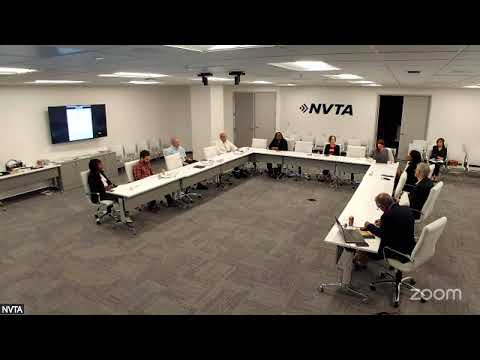
Amanda Sink, Northern Virginia Transportation Authority project delivery and grants manager, told the Planning Coordination Advisory Committee on Sept. 24 that NVTA staff have drafted high‑level strategies to implement goals the authority adopted earlier this year and will bring a final plan to the authority for tentative presentation in October and adoption in November.
Amanda Sink, Northern Virginia Transportation Authority project delivery and grants manager, told the Planning Coordination Advisory Committee on Sept. 24 that NVTA staff have drafted high‑level strategies to implement goals the authority adopted earlier this year and will bring a final plan to the authority for tentative presentation in October and adoption in November. "I'm Amanda Sink. I'm the project delivery and grants manager," she said as she opened the update. The draft plan sets four goals: lead the region's transportation initiatives; maximize public benefit through project selection and delivery; enhance regional planning through technical assistance and data driven information; and safeguard and diversify NVTA's revenue sources. The strategies under those goals emphasize flexibility to respond to unexpected mandates and evolving technologies, stronger oversight of project sponsors to help accelerate delivery, public transparency through tools such as novagateway.org, and a push to pursue federal competitive funding when appropriate.
Why it matters: the strategic plan is intended to be an umbrella document that guides NVTA work across programs such as TransAction (NVTA's long‑range transportation plan) and the six‑year program. Committee members pressed staff on how the high‑level strategies will be translated into measurable performance metrics and how committees and jurisdictional staff will be involved as the NVTA moves from strategy to implementation. "As I was going through these strategies, I think you can see they're very high level," Sink said, adding the plan will be a "living document" with annual metric reports.
Committee members sought clarity on origin and review. Council member Pearson asked whether the strategies were bottom‑up or top‑down; Sink said staff drafted the strategies and briefed ARJAC (the Agency and Jurisdictional staff committee) and the technical advisory committee before presenting to PCAC. Committee members asked how specific initiatives would be developed and what role elected officials and local staff have in the "flesh on the bones" work after adoption. NVTA staff said implementation items such as TransAction updates, the Transportation Technology Strategic Plan work, and specific initiatives (for example, the bicycle and pedestrian funding initiative briefed later in the meeting) will return to committee cycles for review and endorsement.
On metrics and TransAction: staff said quantifying the high‑level strategies is best done through program products such as the TransAction update and the six‑year program, both of which carry the performance measures and scoring that determine project eligibility and prioritization. Sink said NVTA released the TransAction update request for proposals recently, with a pre‑proposal conference scheduled the week following the PCAC meeting; staff expect the next TransAction adoption to follow a multi‑year schedule with a likely adoption target in late 2027. Committee members noted greenhouse gas and other sustainability measures should be able to fit under the stated strategies; staff pointed to existing TransAction performance measures (including greenhouse gas metrics in the current TransAction cycle) as the place to set specific, weighted metrics.
Discussion vs. action: the Sept. 24 discussion was informational and advisory; the committee did not adopt policy at the meeting. Staff said the authority had already adopted the plan's vision, mission and strategic goals in May and that the current work is finishing the underlying strategies and metrics and returning them to the authority for final action. Annual updates and metric reports are planned to track implementation. "This strategic plan is not going to be a plan that we just adopt, close the book, sits on the shelf," Sink said.
Background details: staff emphasized the plan is aligned with NVTA's enabling code and legislative mandates and will not propose actions outside that authority. The plan adds direction to NVTA's roles including advocacy in state and federal forums and continued emphasis on technology and data analytics.
Looking ahead: staff will incorporate committee feedback and present the draft strategies to the authority in October, with a final adoption targeted for November. Committee members will have further opportunities to comment as implementation products including the TransAction update and six‑year program are developed.