
PSC approves Whitewater Solar project with conditions after contested review
Get AI-powered insights, summaries, and transcripts
Sign Up Free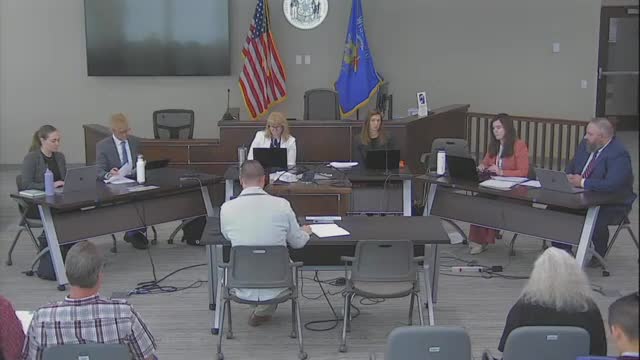
Summary
Whitewater Solar LLC’s application for a 180-megawatt photovoltaic generation facility won approval from the Public Service Commission of Wisconsin on Sept. 25, 2025, with standard and project-specific conditions attached.
Whitewater Solar LLC’s application for a 180-megawatt photovoltaic generation facility won approval from the Public Service Commission of Wisconsin on Sept. 25, 2025, after commissioners applied standard statewide conditions and several project-specific requirements. The company’s project area spans roughly 2,400 acres across the city of Whitewater and parts of Jefferson and Walworth counties; about 10–15 acres are expected to be fenced for arrays, a substation and an operations building.
The commission framed the decision around the statutory CPCN requirements in Wisconsin Statute 196.491 and related laws, and commissioners stressed that the record — which included public comments, interventions and additional filings after mid‑process layout changes — supported issuing the certificate with conditions. “I will vote for the approval of this application, but with conditions that we can get into as we work our way through the decision matrix,” Commissioner Tricia Nieto said during the discussion.
Why this matters: the project is a merchant generator that will sell output into the wholesale market rather than directly serving retail customers. As a merchant plant it is exempt from the needs-analysis typically required of regulated utilities, but the commission must still determine whether the project meets public-interest siting and environmental criteria and whether it will have undue adverse impacts. The commission found no persuasive record evidence that the project would harm competition in the wholesale market or unreasonably interfere with local land-use plans.
Key findings and conditions - Statute and process: Commissioners reviewed requirements under Wis. Stat. §196.491 (including subsections on siting, environmental impacts and brownfields), the state Energy Priorities Law and the Wisconsin Environmental Policy Act (WEPA). Staff prepared an environmental assessment and a supplemental assessment after the applicant revised layouts mid‑proceeding. - Project scope: the developer proposes 180 MW AC capacity, interconnection at an adjacent We Energies substation via a short 138 kV line, and an anticipated in‑service date of 2028. The developer indicated an anticipated project life of about 30 years with potential future extensions. - Public participation and record changes: the record included a large number of public comments, nonparticipating landowner interventions and technical filings; the commission and the administrative law judge ordered an open house and a roundtable after the developer submitted significant layout revisions during the proceeding. - Environmental and land‑use review: commissioners found no evidence the project would have an undue adverse impact on ecological balance, historic sites, public health or recreational uses, and concluded the design and proposed siting met Wis. Stat. §196.491(d)(3) siting criteria. The commission also determined no practicable brownfield sites were suitable for a project of this size and proximity to transmission. - Project‑specific conditions: in addition to standard conditions the commission custom‑tailored several requirements, including vegetation establishment reporting (70% uniform vegetation density thresholds), a winter stabilization plan, wetland and waterway protections, fencing bottom apertures to allow small wildlife passage, and a requirement that the developer file executed joint development agreements (JDAs) upon signing. Commissioner Nieto said she would also propose three additional project-specific conditions addressing executed JDAs, a detailed complaint/inquiry process and relocation of a staging or laydown yard. - Complaint process and community engagement: commissioners emphasized the need for clearer, project-specific complaint and outreach procedures and asked the applicant to file those procedures with the commission prior to construction. “The complaint point of contact should have sufficient knowledge and authority to resolve complaints,” the commissioners directed.
What the commission decided and next steps The Commission approved the CPCN for Whitewater Solar LLC with the standard statewide conditions for large generation projects and the additional project-specific requirements described above. Commissioners noted the developer’s commitments in the record will bind successors and future owners of the facility. The order requires the developer to provide additional filings (e.g., final JDAs when executed, MISO/other interconnection study results if applicable, and construction-phase plans) and directs staff to monitor compliance during construction.
Local context and implementation risks The project is proposed in largely agricultural areas; participating landowners signed voluntary leases. Commissioners noted that the project will remove only a small fraction of agricultural acreage from production for the project life and that, where applicable, lands could return to agriculture after decommissioning. The commission rated implementation risk as medium given the need for routine state and federal permits and the possibility of future ownership transfers (a future sale to a public utility would require a separate buy‑sell review).
Reported statements Chairperson Strand urged participants to maintain respectful rhetoric in filings and hearings, calling staff “true public servants” and warning against personal attacks in the record. Commissioner Nieto thanked parties for their participation and said she would vote to approve the project with conditions. Commissioner Hawkins emphasized that merchant projects still face substantial permitting and regulatory requirements despite being exempt from some utility need analyses.
What remains to watch The order requires continued community outreach, filing of executed JDAs and the complaint process prior to construction, and several construction-phase submittals to commission staff. If the project is sold later to a regulated utility, a separate buy‑sell docket will be required and would revisit need and cost matters.