Get Full Government Meeting Transcripts, Videos, & Alerts Forever!
Get email alerts on the Asylum And Immigration Policy topic
No spam. Unsubscribe anytime.
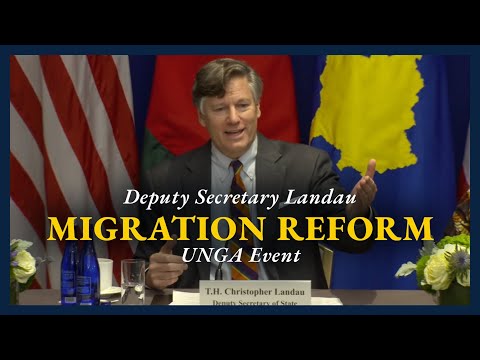
Panelist says asylum system is being abused, outlines five principles to preserve protection
Summary
An unnamed panelist at a migration forum said asylum systems worldwide are being abused by large numbers of migrants and urged an international rethink, offering five principles — including national border control and temporary refugee status — to preserve asylum for those facing genuine persecution.
Panelist (unnamed), speaking at a migration forum, said on the panel that asylum systems worldwide have been subject to abuse and outlined five principles he said are needed to preserve asylum for people facing genuine persecution. "We have to be realistic that these laws are now being abused," the panelist said.
The panelist said the problem is not limited to one country and warned that mass claims for asylum can overwhelm adjudication systems and bury genuine cases. He cited what he described as a common outcome in current adjudications: "90 plus percent of people are found not to be eligible for asylum," and said long delays can follow, giving one example that some people wait "six years" for individualized interviews.
Those consequences, he said, risk turning asylum into a substitute for ordinary migration and undermining international support for the refugee system. "If you have hundreds of thousands of fake asylum seekers, what happens to the real asylum seekers? They get lost in the midst of a massive bureaucratic process," he said.
The panelist set out five principles he said should guide an international response: every nation has the right to control its borders; there is no right to receive asylum in a country of an individual's choice; refugee status should be temporary rather than a de facto permanent migration pathway; states should discourage abuse of the asylum process; and countries should accept expeditious returns of their nationals when lawful. He summarized one of those principles as: "Every nation ultimately has the right to control its own borders."
He also recounted an anecdote to illustrate perceived misuse: an ambassador told him of a person with asylum who was driving for Uber and had traveled back to the country from which he had claimed asylum. The panelist used the example to question how some asylum claims are used and to argue for stricter, faster adjudication and compliance with outcomes.
The speaker referred to the historical origins of modern asylum systems after World War II and credited the United Nations with promoting international standards, while distinguishing asylum from broader immigration policy. He said asylum was intended to protect people at imminent risk of persecution on narrow, enumerated grounds such as religion, race or political opinion, not to provide an economic migration route.
The panelist noted recent national actions in other countries as examples of tougher rules, saying, "I read an article the other day that Greece enacted a new law... asylum seekers whose claim is rejected... have to return within 14 days," and adding that critics had condemned that requirement.
The remarks were presented as the panelist's perspective in the forum; he said views on migration and asylum would vary among co-panelists. The forum discussion closed with the panelist thanking the other participants and urging an international conversation on how to preserve asylum for people facing genuine persecution.