Get Full Government Meeting Transcripts, Videos, & Alerts Forever!
Get email alerts on the Public Art Survey topic
No spam. Unsubscribe anytime.
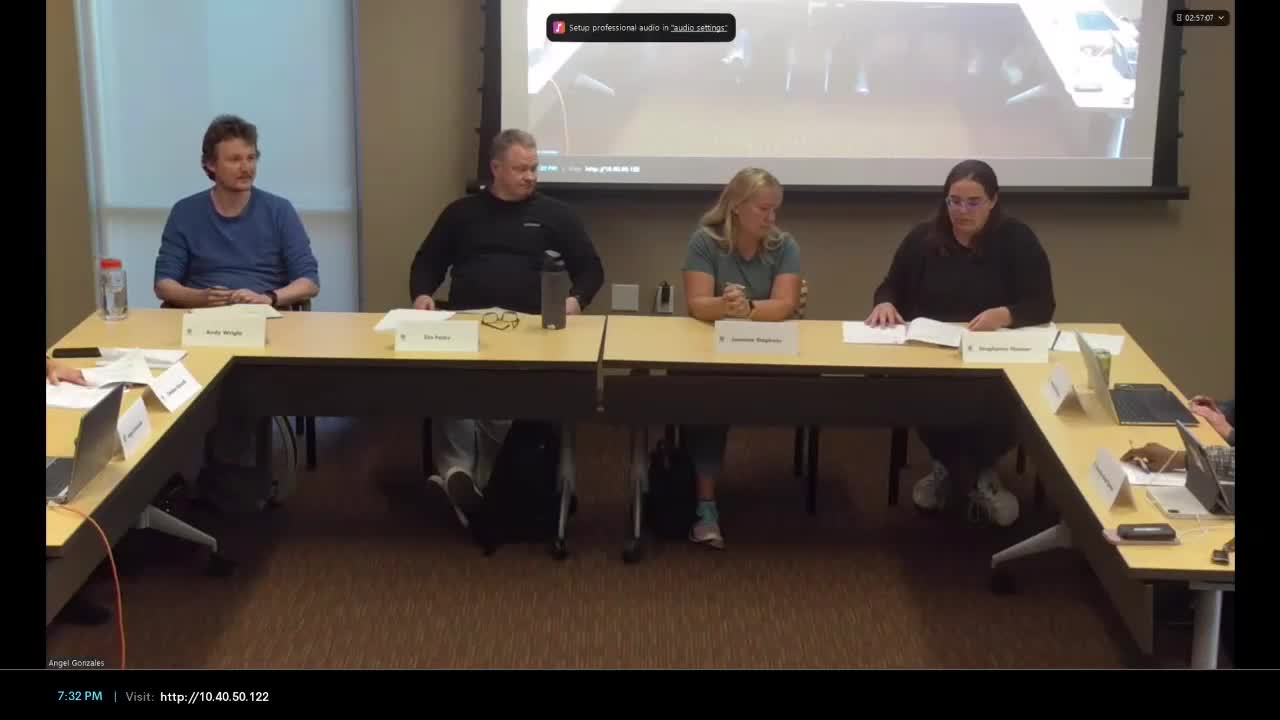
Art board approves community arts questionnaire, agrees revisions and non‑statistical scope
Summary
The Art and Public Places Board approved a revised community arts questionnaire after debate over length, demographic questions and question order; the board noted the survey is qualitative and not statistically valid.
The Art and Public Places Board voted to approve a revised community arts questionnaire, asking staff to reorder sections and make edits discussed during the meeting while noting the tool is a qualitative, non‑statistically valid instrument. The motion was made by board member Tim and seconded by board member Jasmine; members voted “all in favor.”
Board members debated several changes before the vote, including removing an on‑screen “confetti” animation that some said was visually distracting on phones, moving questions about potential decommissioning of public artwork higher in the questionnaire so more respondents would see them, and whether to include household income or a neighborhood‑of‑residence question in the demographics section. Several board members stressed that all demographic questions should remain optional and that limiting multiple‑choice selections to a maximum of three per question would encourage clearer responses.
The board’s stated purpose for the questionnaire is qualitative community input to inform art selection, placement and deaccessioning decisions rather than to produce statistically representative results. Board member Tim moved the approval “with the understanding that it utilizes a non statistically valid methodology intended to gather qualitative community input,” language the board incorporated before the vote.
Why it matters: The questionnaire will inform future public‑art decisions, including whether and how to deaccession pieces the board may consider for removal or relocation. Board members emphasized using the survey to identify which works are widely recognized and which neighborhoods are underrepresented in public‑art engagement.
Supporting details: Discussion items the board flagged for staff follow‑up included: (1) remove or make optional the confetti animation on mobile devices, (2) reorder sections to present decommissioning/attachment questions earlier so more respondents reach them, (3) keep demographic items optional but consider adding a neighborhood‑of‑residence question as more actionable than household income, and (4) keep selection limits (up to three choices) on category questions to improve data usefulness. The board also agreed the survey should allow respondents to pause and return later via a landing page.
The board directed staff to implement the agreed edits and to publish the questionnaire as a qualitative outreach tool; no additional formal action or budget allocation was taken at the meeting.