Lifetime Citizen Portal Access — AI Briefings, Alerts & Unlimited Follows
Appeals court weighs late expert disclosures and property tracing under prenup in Paulson divorce appeal
Loading...
Summary
During oral argument in Christopher Paulson v. Trisha Paulson, counsel debated whether a late rebuttal expert disclosure justified exclusion under Rule 26 and whether the trial court correctly applied California transmutation and exhaustion-tracing principles to distribute property created or acquired during a long-term marriage.
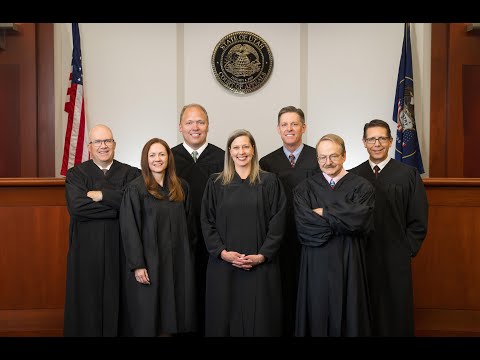
The Utah Court of Appeals heard argument in Paulson v. Paulson over two central areas: whether the trial court properly excluded a late rebuttal expert opinion in an alimony dispute, and whether the trial court correctly distributed property under a prenuptial agreement that the parties and the judge analyzed using California transmutation and tracing doctrines.
Rodney Parker, counsel for Christopher Paulson, argued that the rebuttal expert disclosure for Townsend was a practical use of Rule 26’s allowance for “opinions expected” when rebuttal work must be done quickly. Parker said the timing — roughly three weeks between disclosure and the fuller report — and the realities of litigation during the COVID era meant counsel had limited time to obtain subpoena returns and finalize an expert report. He emphasized that the alleged harm to Trisha Paulson from the late disclosure was self-inflicted because her counsel had elected to file a summary-judgment motion rather than depose or insist on a full expert report first. “That harm can be remedied,” Parker told the panel, arguing courts should avoid excluding opinions where prejudice can be cured by a deposition or limited reopening of discovery.
Julie Nelson, counsel for Trisha Paulson, told the court the rule-26 exclusion was within the trial court’s discretion because Townsend’s disclosure gave only topic-level information and not the summaries the rule requires, and the district judge found the disclosure did not permit meaningful cross-examination before expert discovery closed. Nelson also stressed the court’s prior cases — including Bodell and RJW Media cited in the briefing — where courts found prejudice when new expert theories appeared after discovery deadlines. She argued the exclusion was not merely procedural but that the late and incomplete disclosure “sandbagged” petitioner's case and that reopening expert discovery would have been substantial and disruptive.
The panel also heard extended argument on property division. Parker contended that many assets were Christopher’s separate property when acquired, that title sometimes sat in only his name or in both names as a matter of convenience, and that the prenuptial agreement’s language (section 3.01 and 3.03) reserved certain proceeds as separate. He disputed the trial court’s use of recapitulation-style exhaustion tracing across the entire marriage and said the court misapplied California law when it treated long-term commingling as sufficient to convert all assets.
Nelson replied that the prenup’s transmutation clause (section 7) and California law required the trial court to look to whether written transmutation occurred before applying presumptions about joint title. She told the panel that the court correctly applied exhaustion tracing to several accounts and that direct tracing supported other awards. Nelson cited California authority (the court’s opinion cited Bovino and more recent decisions) holding that transmutation rules must be addressed before presuming joint title and that exhaustion tracing can be appropriate if the record shows year-by-year income and expenditures.
Judges asked several procedural and remedial questions. One judge asked whether, if exclusion of Townsend effectively foreclosed the alimony claim, the trial court should have used a lesser sanction. Counsel debated whether exclusion here was tantamount to dismissal, citing the Utah Supreme Court’s Corollis opinion and the Bodell line of cases. The panel also questioned how the court should handle claimed preservation failures and when it is appropriate to remand for fact-finding versus resolving legal questions on the appellate record.
On disqualification, counsel discussed a contention that a judge had not disclosed a prior representation by a lawyer at a firm that later became involved in the case. The presiding judge at the trial-court level had denied a disqualification request and the appeals briefing argued both appearance and actual-conflict standards. Counsel told the appeals panel that the presiding judge found no appearance of bias and that some procedural choices (including timing of the disqualification filing) influenced the trial-court rulings.
Why it matters: The questions raised affect routine family-law practice: how strictly courts may apply expert-disclosure deadlines, whether exclusion is an appropriate remedy versus reopening discovery, and how prenups and state tracing rules interact when spouses commingle funds over decades. The case also highlights how federal- and state-style discovery timetables and pandemic-era delays can complicate expert disclosures and case management.
Ending: The panel took the arguments under advisement and said it would issue a written decision addressing the interplay of Rule 26 standards, harmlessness/prejudice, and the trial court’s application of California transmutation and tracing doctrines to the distribution of property.